
The Shark That Defies Its Reputation
Among the many species that roam the ocean, the Lemon shark stands out for an unexpected reason. Often described by divers as the “golden retriever of the sea,” this large coastal shark has earned a reputation for being unusually calm, social, and even approachable.
In contrast to the long-standing image of sharks as aggressive predators, lemon sharks are helping reshape public perception, showing that these animals can be curious, interactive, and far more complex than commonly believed.
Distinctive Look and Impressive Size
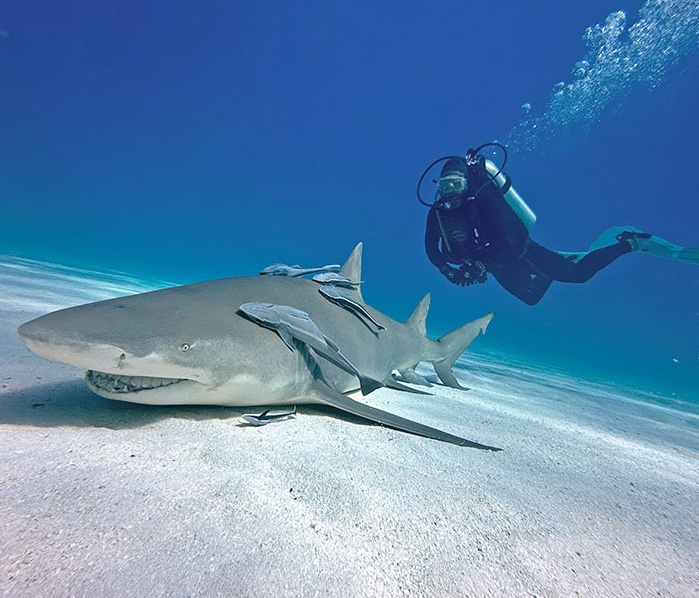
Lemon sharks get their name from their unique yellowish tint, which ranges from pale yellow to olive-brown along the top of their bodies, fading to a lighter underside. This natural coloring acts as effective camouflage against sandy ocean floors in shallow waters.
They have a sturdy, muscular build with a short, blunt snout and two dorsal fins that are nearly equal in size, a feature that makes them easy to identify. Adult lemon sharks typically grow between 8 and 10 feet long, though some individuals can exceed 11 feet and weigh over 400 pounds.
Despite their size, their movements are often slow and controlled, adding to their calm presence in the water.
Coastal Habitats and Global Range
These sharks thrive in warm, shallow environments, preferring areas such as coral reefs, mangroves, lagoons, and sandy flats. They are commonly found across the western Atlantic, including the Caribbean and Gulf of Mexico, and can also be spotted in parts of the eastern Pacific and along the coast of West Africa.
Young lemon sharks often grow up in mangrove nurseries, where the dense roots provide protection from larger predators. Adults remain close to shore and are known to rest on the seabed, using a breathing method that allows them to stay still without constantly swimming.
Social Behavior That Sets Them Apart
Unlike many shark species that are largely solitary, lemon sharks are highly social animals. They frequently move in groups and form associations with others of similar size and age. Research and diver observations suggest that they can learn from one another and may even recognize familiar individuals.
During the day, they are generally relaxed and curious, while at night they become more active, hunting fish, rays, and other marine creatures. As apex predators, they play a key role in maintaining the balance of coastal ecosystems.
The “Petting” Phenomenon Explained
What truly sets lemon sharks apart is their tolerance for close human interaction. In well-known dive locations such as Tiger Beach, divers have reported repeated encounters with the same individuals, some of which appear to recognize and approach humans willingly.
Stories and videos show lemon sharks swimming close, nudging divers, and even lingering for gentle contact. Some seem to respond to touch by relaxing, closing their eyes, or returning for more interaction. This behavior has led to comparisons with friendly domestic animals and earned them nicknames like “ocean puppies.”
However, experts caution that these interactions often occur in controlled environments and may be influenced by feeding routines or the sharks’ natural curiosity.
A Balance Between Wonder and Caution
Despite their approachable nature, lemon sharks are still powerful wild predators. While attacks are rare and typically non-fatal, they can occur, especially if the animals feel threatened or confused.
Marine experts strongly advise against touching sharks outside of guided, professional settings. Respecting their space and natural behavior is essential, both for human safety and for the well-being of the animals.
Changing Perceptions and Inspiring Conservation
Lemon sharks are playing an important role in shifting how people view sharks as a whole. Encounters with these animals often leave divers with a deeper appreciation for marine life and a stronger desire to protect it.
By challenging the stereotype of sharks as mindless killers, they highlight a broader truth: these creatures are intelligent, social, and vital to ocean health.
In a world where sharks are often misunderstood and threatened, the lemon shark offers a rare and powerful reminder that even the ocean’s most feared predators can inspire connection, curiosity, and respect.
Also Read
Comfort Addiction: The Silent Habit Experts Say Could Be More Dangerous Than Drugs or Alcohol