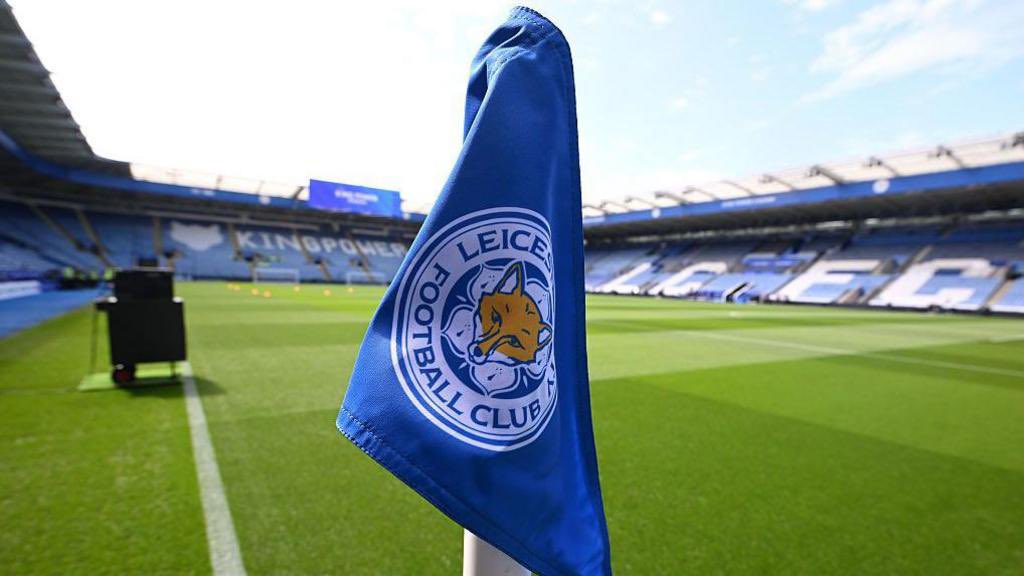
A decade ago, Leicester City delivered one of the most extraordinary triumphs in sporting history. Today, there is growing discussion around a far less romantic possibility, a fall that would rank among the most dramatic boom-and-bust cycles the game has ever seen.
The idea of Leicester dropping to the third tier of English football within ten years of lifting the title may sound extreme. Yet history suggests it is not as impossible as it seems.
The Timeline: From Glory to Uncertainty
The 2015–16 season remains etched in football folklore. Leicester’s 5000-to-1 title win defied logic, rewriting what was considered possible in the Premier League.
What followed, however, has been far less stable.
By 2021, the club added silverware with an FA Cup victory, reinforcing their place among England’s elite. But within just a few years, cracks began to show. Relegation in 2023 signaled the start of a difficult period, even though the club managed to bounce back with promotion in 2024.
Now, looking ahead to 2026 in this hypothetical scenario, the possibility of a drop to League One would imply a catastrophic chain of events, including another relegation and a failure to recover.
Not Unprecedented: When Giants Fall
As shocking as it sounds, Leicester would not be the first former champion to fall this far.
Manchester City, long before their modern dominance, dropped to the third tier in 1998 after winning the league decades earlier. Leeds United followed a similar path, going from champions in 1992 to League One by 2007 amid financial collapse.
Even Blackburn Rovers, Premier League winners in 1995, found themselves in the third tier by 2017.
These examples serve as a reminder that success at the top offers no long-term guarantees.
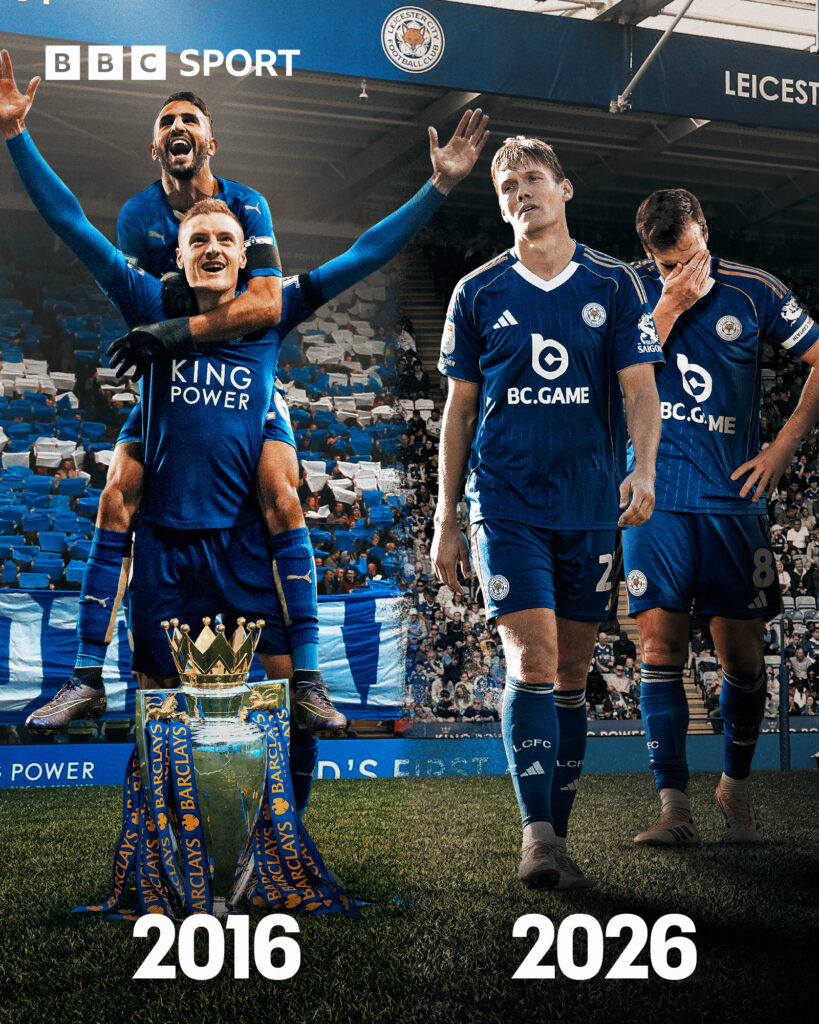
Why a Fall Like This Would Matter
The significance of such a collapse goes beyond league positions.
Financially, the gap between the Premier League and League One is enormous. Clubs built for top-flight competition often carry wage structures that become unsustainable after relegation, creating a spiral that is difficult to escape.
There is also the emotional weight. Leicester’s title win is widely regarded as the ultimate underdog story. A return to smaller stadiums and lower-league football would feel like the closing chapter of that fairy tale.
Perhaps most striking would be what it says about stability. For years, Leicester has been viewed as a well-run club. A collapse of this magnitude would raise serious questions about recruitment, long-term planning, and financial management.
The Reality Check
Despite the speculation, the present situation is far less dramatic.
Leicester secured promotion back to the Premier League for the 2024–25 season and are currently focused on maintaining their place among England’s top teams. While challenges remain, including scrutiny over past spending, the club is not on the brink of a third-tier decline.
For Leicester to end up in League One by 2026, it would require a near-perfect storm, a poor Premier League campaign followed by immediate relegation again from the Championship.

A Reminder of Football’s Fragility
Football moves quickly. Fortunes rise and fall, sometimes faster than expected.
Leicester City’s story has already shown both extremes, from impossible glory to real-world struggle. Whether they stabilize or slide further will depend on decisions made now, not memories of the past.
But if such a relegation were to happen, it would stand as one of the most striking reminders that in football, even miracles can have an expiration date.
Also Read
Bayern and Atlético Shock Real Madrid and Barcelona in Historic Champions League Double Upset
Arsenal’s Title Charge Wobbles After Costly Defeat to Manchester City