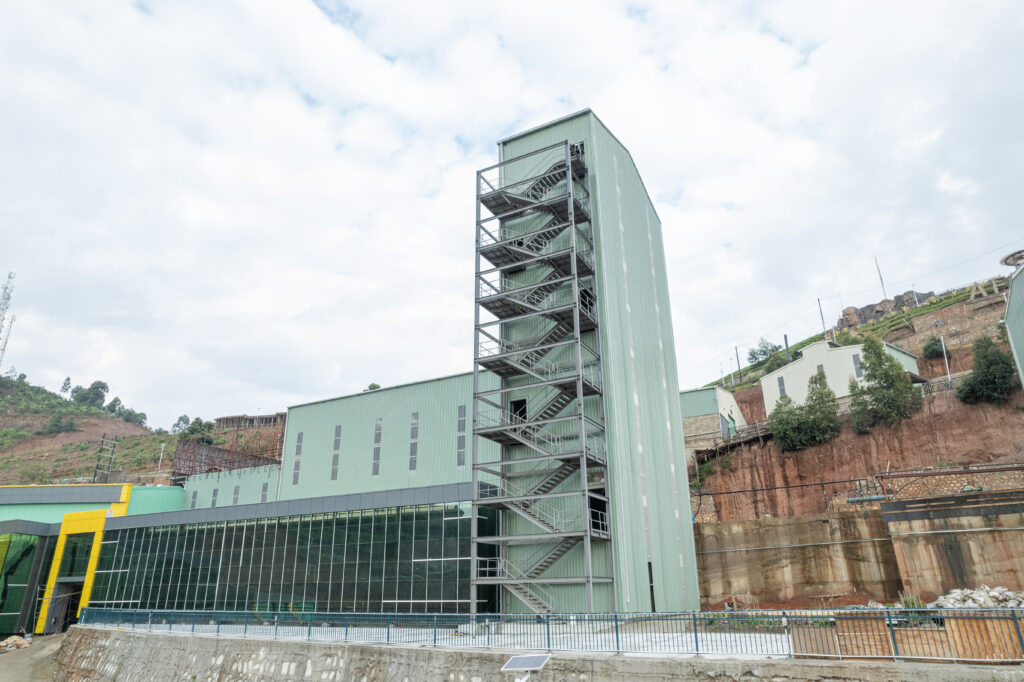
As Uganda’s industrial sector expands and infrastructure demand continues to rise, developers are increasingly rethinking one of construction’s biggest challenges: time. Recognizing that project delays often translate into higher costs and lost business opportunities, Uganda Baati is strengthening its investment in modern construction through its SafBuild Pre-Engineered Building (PEB) solution—a technology that promises to deliver commercial and industrial buildings in a fraction of the time required by conventional construction.
The renewed focus on pre-engineered buildings comes at a pivotal moment for Uganda, where rapid urbanization, industrialization, and growing private sector investment are driving demand for faster, more efficient infrastructure development.
Why Time Has Become Construction’s Most Valuable Asset
For decades, brick-and-mortar construction has been the preferred approach for commercial and industrial developments across Uganda. While familiar and widely adopted, traditional construction methods often require between six months and two years to complete, exposing projects to rising material costs, labour inefficiencies, weather disruptions, and delayed returns on investment.
Today’s business environment tells a different story. Investors increasingly measure success not only by construction quality but also by how quickly a facility can begin generating revenue.
It is against this backdrop that pre-engineered construction is gaining momentum.
According to Uganda Baati, SafBuild structures can be completed in as little as 12 weeks, significantly reducing project delivery timelines and allowing businesses to commence operations much sooner.
As the company’s Chief Executive Officer notes, every month saved during construction represents an opportunity for businesses to accelerate production, improve cash flow, and realize returns on investment earlier.
A Different Approach to Modern Construction
Unlike conventional building methods that rely heavily on on-site fabrication, pre-engineered buildings are designed using advanced engineering software before components are manufactured under controlled factory conditions.
Each structural element is then transported to the project site as a complete assembly kit, where installation is carried out with greater speed and precision.
This factory-led approach minimizes material waste, improves quality control, and reduces many of the uncertainties that commonly affect traditional construction projects.
For businesses operating in manufacturing, logistics, agriculture, education, and commercial development, the model offers greater certainty over both project schedules and budgets.
Why Businesses Are Making the Shift
The growing interest in pre-engineered buildings reflects a wider transformation taking place across the global construction industry.
As companies look for smarter ways to manage capital investments, they are increasingly prioritizing solutions that reduce project risk while improving operational efficiency.
Pre-engineered buildings have become attractive because they combine faster construction timelines with predictable costs, flexible design options, and lower long-term maintenance requirements.
For developers, these advantages extend well beyond the construction phase. Faster completion means earlier occupancy, quicker revenue generation, and improved competitiveness in rapidly changing markets.
Supporting Uganda’s Industrial Transformation
Uganda Baati believes the technology is already contributing to the country’s industrial development agenda.
Its SafBuild solutions have been deployed across a range of landmark projects, demonstrating the versatility of pre-engineered construction for industrial, institutional, and public infrastructure.
Among the notable developments are facilities at the Inspire Africa Coffee Park, buildings for Mountains of the Moon University, and visitor centres developed for the Uganda Wildlife Authority.
These projects illustrate how modern building technologies can support Uganda’s ambitions to expand manufacturing, strengthen tourism infrastructure, and improve public service delivery while shortening construction timelines.
Meeting the Demands of a Growing Economy
Uganda’s construction sector is evolving alongside broader economic trends.
The country’s expanding industrial parks, logistics hubs, commercial centres, and agricultural processing facilities are creating sustained demand for infrastructure that can be delivered efficiently without compromising quality.
As governments and private investors continue to prioritize industrialization, the need for scalable building solutions is expected to increase.
Industry analysts also point to growing global adoption of pre-engineered buildings, with the market projected to expand significantly over the coming years as sustainability, efficiency, and cost management become central considerations in infrastructure development.
For Uganda, this presents an opportunity to adopt construction technologies that align with its long-term economic development goals.
Looking Ahead
Pre-engineered buildings are steadily reshaping how businesses approach construction investment.
Rather than viewing buildings simply as physical structures, developers are increasingly seeing them as strategic business assets where speed, efficiency, and operational readiness directly influence profitability.
By expanding its SafBuild offering, Uganda Baati is positioning itself to meet the changing needs of Uganda’s industrial economy while supporting businesses seeking faster, smarter, and more resilient construction solutions.
As infrastructure investment accelerates across East Africa, pre-engineered construction is likely to play an increasingly important role in shaping the region’s manufacturing, logistics, commercial, and institutional landscape.
ALSO READ
Safal Uganda Baati Foundation Boosts Digital Learning in Tororo with Computer Donation Initiative