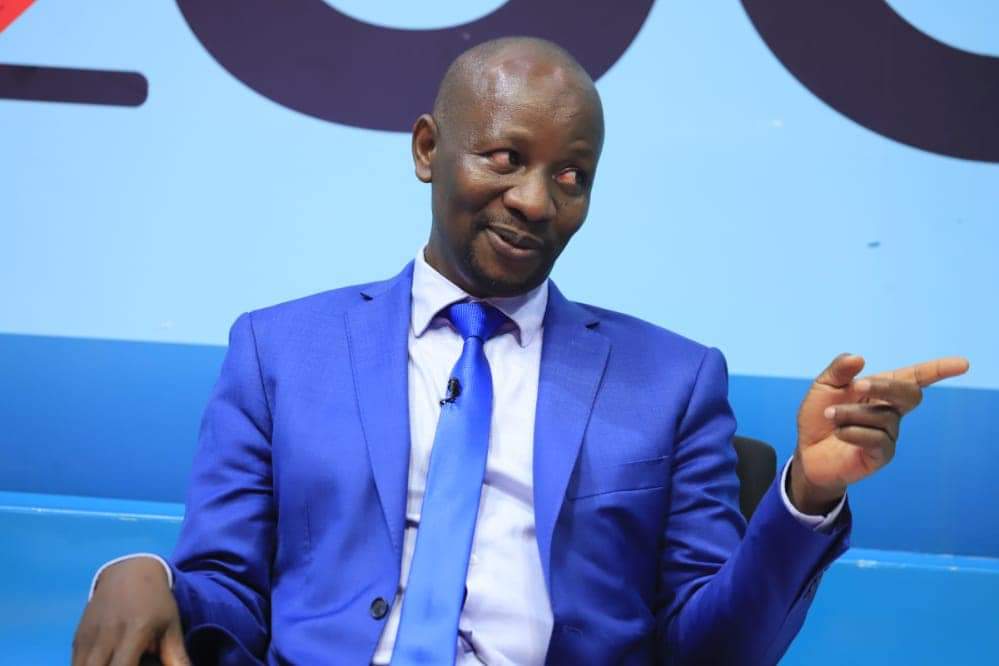
Veteran politician and former journalist Ibrahim Ssemujju Nganda has officially accepted his defeat in the January 15, 2026 parliamentary elections, bringing to a close his 15-year tenure as Member of Parliament for Kira Municipality.
While his exit from Parliament marks the end of a long legislative chapter, Ssemujju insists it does not signal the end of his political engagement.
“I will continue making a contribution towards the struggle for freedom, but this time outside Parliament,” he said, reflecting on his next chapter in public life.
Ssemujju’s political journey began in 2011 when he resigned from journalism to contest the Kyaddondo County East parliamentary seat on the Forum for Democratic Change (FDC) ticket. He won and served until 2016. Following the creation of Kira Municipality as a separate constituency, he successfully transitioned to represent the new seat and went on to retain it in subsequent elections, becoming one of the most recognizable opposition voices in Parliament.
Towards the end of his term in the 11th Parliament, Ssemujju fell out with FDC and, alongside Erias Lukwago and Kiiza Besigye, formed a new political movement. The People’s Front for Freedom (PFF) was officially launched on July 8, 2025, positioning itself as a fresh platform for political reform and democratic activism. Ssemujju contested the 2026 elections under the PFF banner but was defeated by George Musisi of the National Unity Platform. In conceding defeat, Ssemujju pointed to the difficult political environment under which his party contested, noting that PFF leader Kizza Besigye, who serves as Chair of the Council of Eminent Persons, was imprisoned throughout the election period.
“We went into the election with our leader in prison, without resources, and largely on our own,” he said.
Despite this, he expressed gratitude to the voters of Kira Municipality for the trust they placed in him over the years.
“They are the ones who have given me 15 years in Parliament. So I cannot blame them. In their judgement, they think I should stop here,” Ssemujju stated.
Though no longer in Parliament, Ssemujju Nganda’s remarks suggest a continued role in Uganda’s political landscape, one shaped less by parliamentary debates and more by civic activism, reform advocacy, and the broader struggle for democratic freedoms.
For his supporters, his departure from Parliament is not an ending, but a transition into a different kind of leadership one outside the chambers of power, but still firmly within the nation’s political conversation.