Malema Handed a Custodial Sentence in East London Court
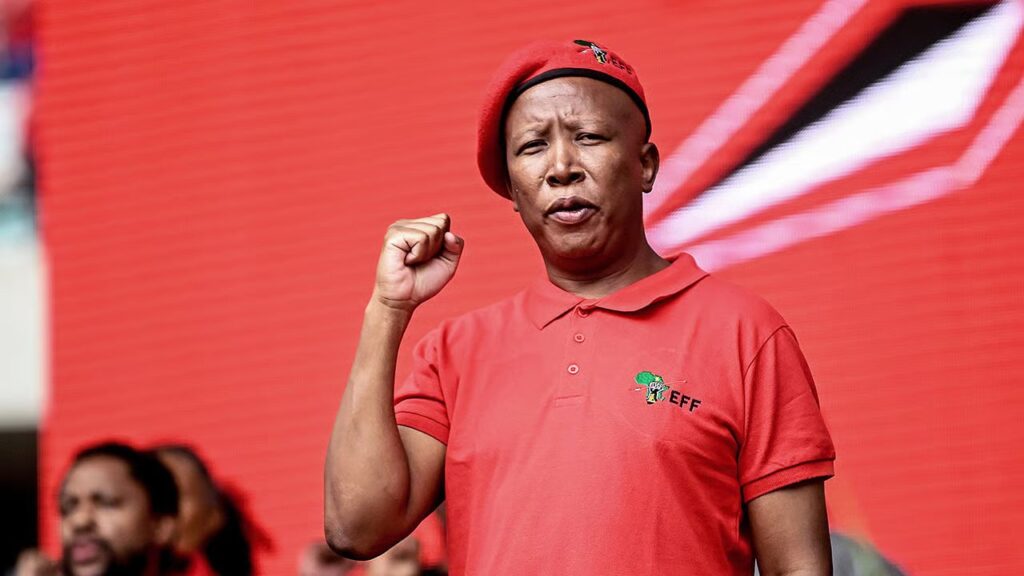
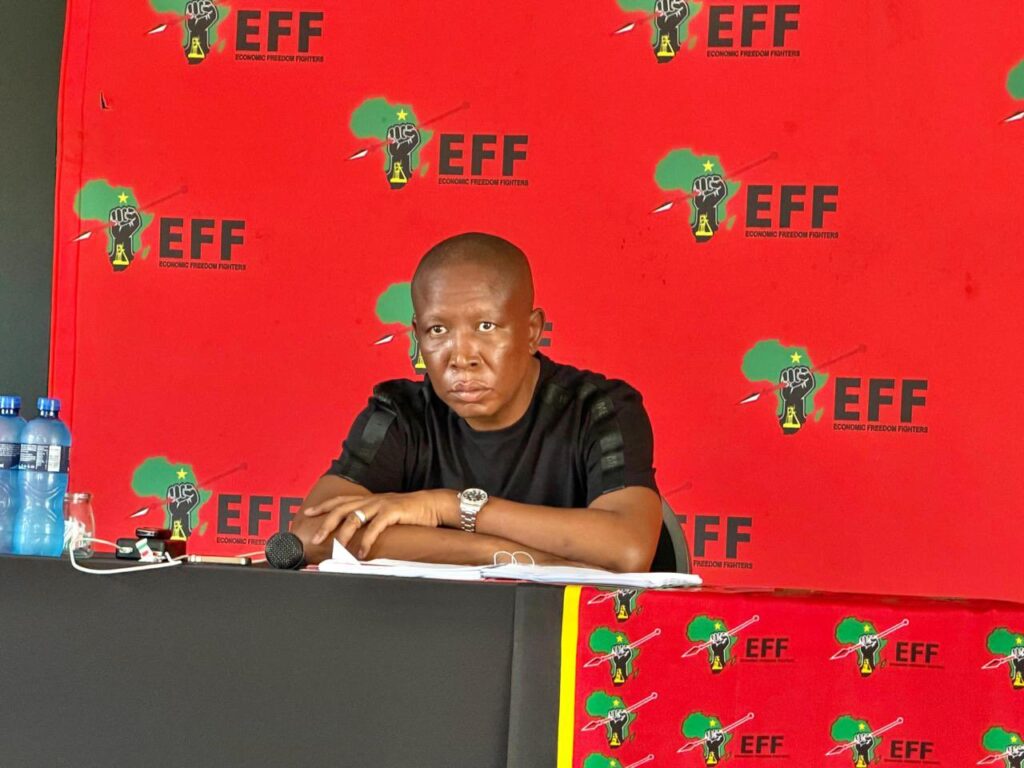
A South African magistrate’s court in East London (KuGompo) has sentenced Economic Freedom Fighters (EFF) leader Julius Malema to five years in direct imprisonment following a long-running firearms case linked to a 2018 rally incident. The judgment, delivered on April 16, 2026, marks one of the most consequential legal rulings involving a sitting opposition leader in recent South African political history.
The case stems from footage showing Malema discharging a rifle into the air during an EFF rally in Mdantsane, Eastern Cape, attended by thousands of supporters. The incident quickly became politically sensitive, raising questions about public safety, political rhetoric, and accountability for high-profile figures.
Court Findings and Charges Under Firearms Law
Malema was found guilty in October 2025 on five counts under South Africa’s Firearms Control Act. These included unlawful possession of a firearm and ammunition, discharging a firearm in a public or built-up area, failure to take reasonable precautions, and reckless endangerment of persons and property. Prosecutors argued that the act created a significant risk due to the crowded nature of the venue.
The state had pushed for a maximum sentence of 15 years, citing the seriousness of firing a weapon in a public gathering. However, the court imposed a five-year custodial sentence, describing the penalty as proportionate to the circumstances while still reflecting the gravity of the offence. Malema has indicated that he will appeal both the conviction and sentence, with the matter potentially reaching the Constitutional Court.
The 2018 Rally Incident and Defense Arguments
The legal proceedings trace back to July 28, 2018, during celebrations marking the EFF’s fifth anniversary. During the event, Malema was filmed firing what authorities later confirmed to be a real firearm into the air while addressing supporters at a packed stadium in Mdantsane.
Malema’s defense argued that the weapon used was not a live firearm but a toy or prop intended for demonstration purposes. The court rejected this claim after reviewing evidence and testimony, concluding that the firearm was real and had been discharged in a manner that endangered public safety. A co-accused linked to a private security company was also implicated in the broader case.
Political Reactions and Constitutional Consequences
The ruling carries significant political implications for both Malema and the EFF. Under South African law, a prison sentence exceeding 12 months, if upheld, can result in disqualification from holding parliamentary office. This raises the possibility that Malema could lose his seat in parliament, depending on the outcome of his appeal process.
The EFF, which has consistently secured around 9 to 10 percent of the national vote in recent elections, remains heavily centered around Malema’s leadership and political messaging. His sentencing therefore, introduces uncertainty for a party that draws strong support from younger voters frustrated by unemployment, inequality, and governance failures. Outside the court, thousands of EFF supporters gathered during proceedings, reflecting the deep polarization surrounding the case.
South Africa’s Judiciary and the Question of Selective Justice
South Africa is widely regarded as one of the continent’s more established democracies, supported by an independent judiciary, a vibrant media environment, and competitive elections. The Malema case followed standard legal procedures, including public hearings, legal representation, and the availability of appeals, reinforcing the formal strength of the country’s institutions.
However, the case has also sparked debate over whether the ruling represents strict enforcement of firearms laws or selective targeting of a prominent political critic. These discussions unfold against a broader backdrop of public dissatisfaction with the ruling African National Congress, which has faced declining popularity amid corruption scandals and economic challenges.
A Wider Pattern Across the African Continent
Beyond South Africa, the sentencing has intensified conversations about a broader pattern in parts of Africa where opposition figures increasingly face legal pressure through courts and security agencies. Critics describe this trend as “lawfare,” where legal systems are used to weaken political rivals through charges such as treason, public order violations, or national security offences.
In Tanzania, opposition figures from the Chadema party were arrested following disputed elections in late 2025, with authorities bringing treason-related charges tied to post-election protests. In Rwanda, the rearrest of opposition figure Victoire Ingabire in June 2025 drew criticism from human rights organizations, who argued that political space for dissent remains tightly constrained. Cameroon also saw arrests of opposition figures amid post-election protests, while Uganda continues to record repeated arrests of long-time opposition leader Kizza Besigye.
Similar concerns have been raised in Zimbabwe, the Democratic Republic of Congo, South Sudan, Angola, and Eswatini, where civil society groups and international watchdogs have reported restrictions on protests, arrests of activists, and shrinking civic space. While these situations differ in context and legal justification, critics argue that the cumulative effect is a weakening of political pluralism in several regions.
Diverging Democratic Trajectories in Africa
Despite these concerns, Africa’s political landscape remains uneven rather than uniformly authoritarian. Countries such as Ghana, Botswana, and Senegal continue to be cited as examples of relatively stable democratic practice, including peaceful transfers of power and stronger judicial independence. These contrasts highlight the diversity of governance outcomes across the continent.
Analysts point to several underlying pressures shaping current trends, including rising youth unemployment, economic inequality, weakened trust in political institutions, and growing digital activism among younger populations. Governments often justify stricter enforcement measures as necessary to maintain stability, particularly in politically tense election cycles. However, critics argue that such measures risk undermining democratic consolidation if applied selectively.
Implications of the Malema Case
The outcome of the Malema case may have lasting implications for South African politics. If the appeal fails and the sentence is upheld, it could weaken the EFF’s organizational structure or reinforce its narrative of political persecution, potentially reshaping its future electoral strategy.
More broadly, the case feeds into ongoing continental debates about the balance between rule of law and political freedom. While strong judicial enforcement is essential for democratic governance, concerns arise when legal actions appear to disproportionately affect opposition figures in politically sensitive contexts.
Ultimately, the case underscores a broader tension in many African democracies between maintaining public order and protecting political dissent. As legal appeals proceed, Malema’s sentence will remain a focal point for discussions about justice, democracy, and political competition in South Africa and beyond.
Also Read
Hungary Turns the Page as Orbán Concedes Defeat to Péter Magyar in Historic Election