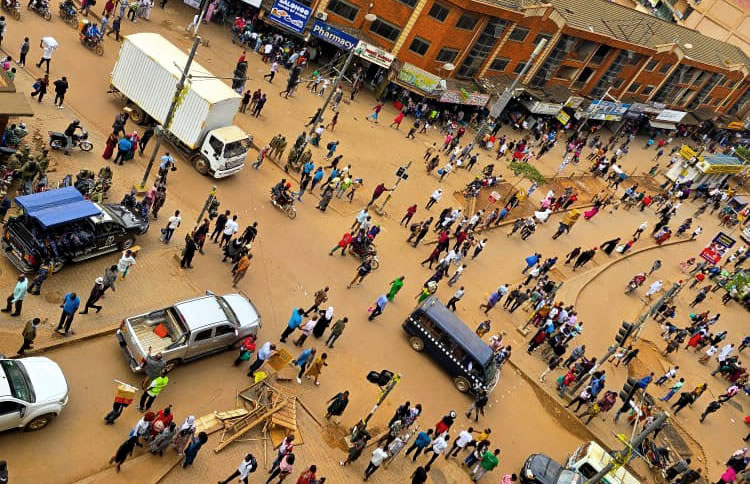
The recent crackdown on street vendors by the Kampala Capital City Authority has stirred mixed reactions in Kampala’s central business district. Early on February 20, 2026, KCCA, supported by police and other security agencies, launched a midnight operation to remove vendors from unauthorized public spaces following a two-week ultimatum set to expire on February 19. Officials, including Kampala Minister Minsa Kabanda and State Minister Kabuye Kyofatogabye, directed traders to vacate walkways, road reserves, and building arcades.
Enforcement teams demolished makeshift stalls and illegal kiosks along major roads such as Namirembe Road, Luwum Street, Nabugabo Street, and in Kikuubo, as well as areas around Mini Price and Kisekka Market. Confiscated goods were first taken into police custody before being moved to KCCA’s yard in Nakulabye. By morning, sidewalks and roadsides were noticeably clear, allowing pedestrians to move freely and easing long-standing congestion.
Many city residents and shop owners welcomed the operation, citing improved mobility, reduced petty theft, and better access to shops. Transport operators, including boda boda riders and taxi drivers, adhered more closely to designated stages, reducing traffic disruptions. KCCA framed the operation as a step toward decongesting the city and formalizing trade, highlighting thousands of vacant stalls in designated markets—reports suggest between 4,000 and 4,500 spaces—as alternative options for relocated vendors.
However, for affected traders, the crackdown has been devastating. Many watched helplessly as their stalls and merchandise were destroyed, expressing frustration and despair. Vendors criticized political leaders for exploiting them for electoral support before abandoning their concerns. Trader associations, including the Kampala City Traders Association and the Federation of Uganda Traders Associations (FUTA), condemned the operation, citing overcrowded markets and lack of sufficient alternatives. They have threatened peaceful protests, petitions to Parliament, and further appeals for more inclusive dialogue.
The crackdown underscores ongoing challenges in managing Kampala’s urban space: balancing a cleaner, more orderly city with the livelihoods of thousands dependent on informal trade. While many residents celebrate the newly organized streets, long-term success will depend on whether displaced vendors are offered viable alternatives. As enforcement continues, vendors are gradually relocating to designated markets, some of which are already experiencing surges in activity, keeping the debate over Kampala’s inclusive urban future alive.