The Supreme Court of the United States has ruled that former President Donald Trump’s emergency tariffs were imposed illegally, delivering a major blow to his trade policy agenda.
In a 6 to 3 decision issued on February 20, 2026, the court found that the administration exceeded presidential authority by using the International Emergency Economic Powers Act (IEEPA) to justify broad tariffs introduced in 2025. Chief Justice John Roberts wrote the majority opinion, joined by Justices Sonia Sotomayor, Elena Kagan, Neil Gorsuch, Amy Coney Barrett, and Ketanji Brown Jackson. Justices Clarence Thomas, Brett Kavanaugh, and Samuel Alito dissented.
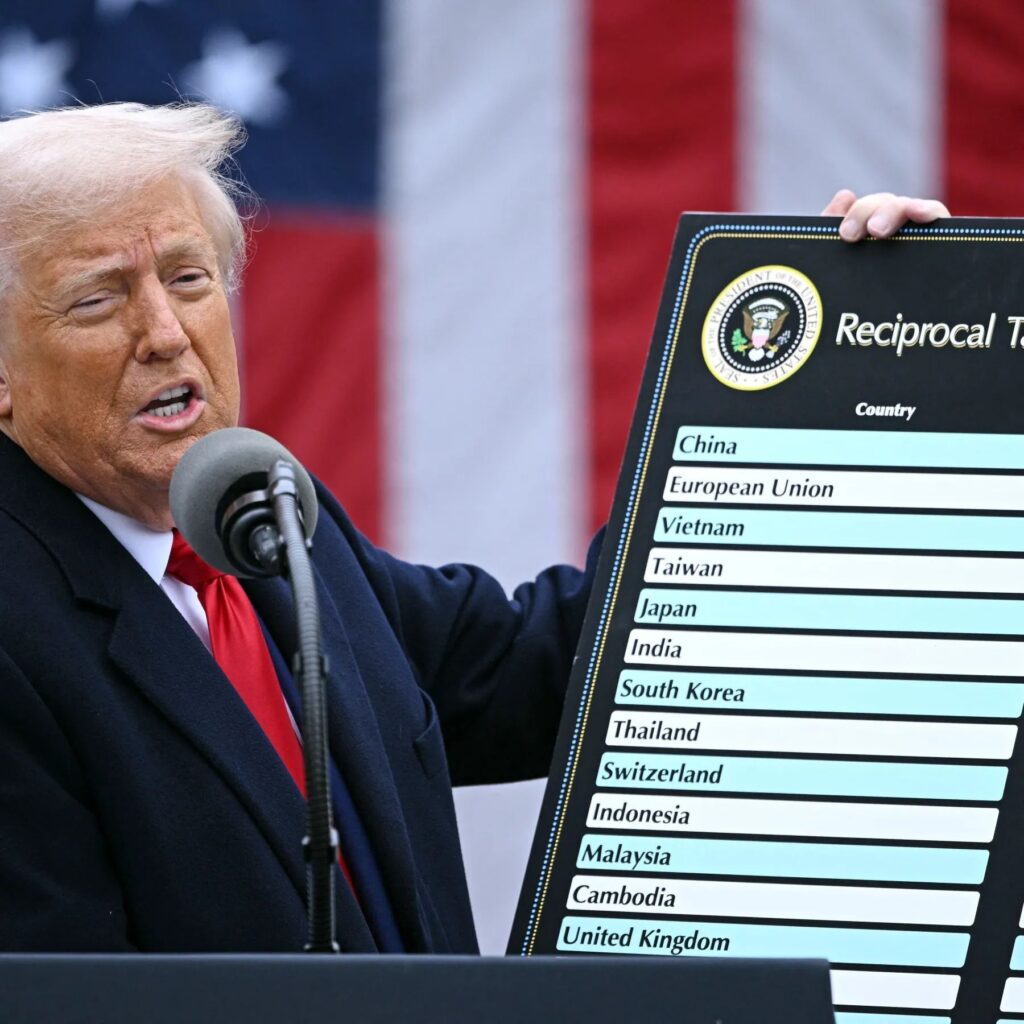
The disputed measures included reciprocal tariffs designed to match foreign trade barriers, with rates starting at 10 percent and rising significantly for some countries, including China. Additional 25 percent duties targeted imports from Canada, Mexico, and China, which the administration linked to concerns over fentanyl trafficking and supply chain vulnerabilities. Trump had declared national emergencies related to trade deficits and economic threats to justify the action.
The court concluded that IEEPA does not grant the president authority to impose tariffs, noting that taxation and trade regulation powers are constitutionally assigned to Congress. Roberts emphasized that no previous president had used the law for tariffs in nearly five decades, reinforcing the ruling that such sweeping economic actions require clear congressional approval.
While the decision invalidates tariffs imposed under IEEPA, it does not affect other duties introduced under separate trade laws. Analysts estimate that between 130 billion and 160 billion dollars in tariffs were collected, much of the cost passed on to consumers through higher prices. The court sent related cases back to lower courts, including the U.S. Court of International Trade, to determine how potential refunds should be handled.
Trump reacted strongly, criticizing the ruling and certain justices during remarks at the White House and on social media. Within hours, he announced a new 10 percent global tariff under Section 122 of the Trade Act of 1974, a move expected to trigger fresh legal challenges.
Political and economic reactions were swift. Gavin Newsom called for refunds to families and businesses affected by the tariffs, while business groups welcomed the decision as relief from uncertainty. Supporters of Trump’s trade approach, however, argued the ruling limits executive flexibility in dealing with global competitors.
Global markets showed volatility following the announcement, with countries such as South Korea holding emergency consultations. The ruling highlights ongoing tensions over presidential authority, trade policy, and the balance of power in the United States government.