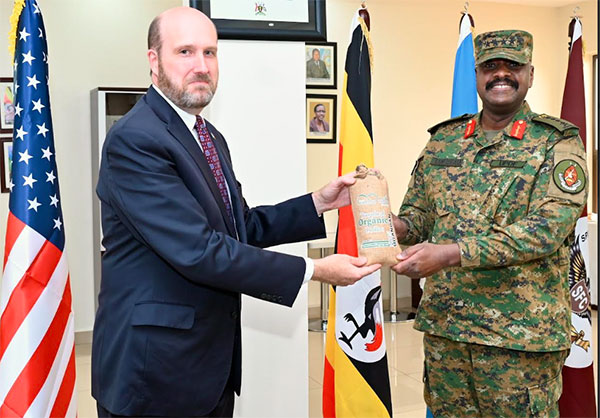
The “First Son” of Uganda and Chief of Defence Forces (CDF), General Muhoozi Kainerugaba, has found himself in the crosshairs of Washington’s elite. After a series of explosive social media posts and allegations of election-day brutality, the U.S. Senate is calling for the “Red Line” to be drawn—permanently.
The “Red Line” Rejection
The firestorm erupted following the disputed January 15, 2026, General Election. Senator Jim Risch, the powerful Chairman of the US Senate Foreign Relations Committee, has publicly rejected Muhoozi’s attempts at an apology, stating the General has officially “crossed a red line.”
Despite Muhoozi deleting several provocative tweets—including one where he claimed to have “neutralized” opposition elements and suggested Bobi Wine was next—Washington isn’t buying the backtrack.
“The President’s son, and likely successor, cannot just delete tweets and issue hollow apologies,” Senator Risch posted on X. “The U.S. must re-evaluate its security partnership, which includes sanctions and military cooperation.”
Why the Heat is Rising
The U.S. pressure isn’t just about mean tweets. The push for sanctions is fueled by three major flashpoints:
-
Election Brutality: Reports of “snatch squads,” abductions, and the use of lethal force during the 2026 election cycle.
-
The Ambassador Ultimatum: Muhoozi previously threatened to expel U.S. Ambassador William Popp, demanding an apology for what he called “disrespecting” President Museveni.
- Human Rights Violations: The U.S. State Department has already sanctioned four high-ranking Ugandan police officers for torture, and Muhoozi is now the primary target for the next round of “Global Magnitsky” restrictions.
The General’s Defiant Counter-Strike
Never one to back down, Muhoozi has signaled that Uganda won’t be bullied. In response to the talk of sanctions, he suggested that if the U.S. moves forward, Uganda will respond by sanctioning them back.
Meanwhile, President Museveni has ignored the international outcry, recently “decorating” his son and the UPDF for their role in maintaining order during the election season.