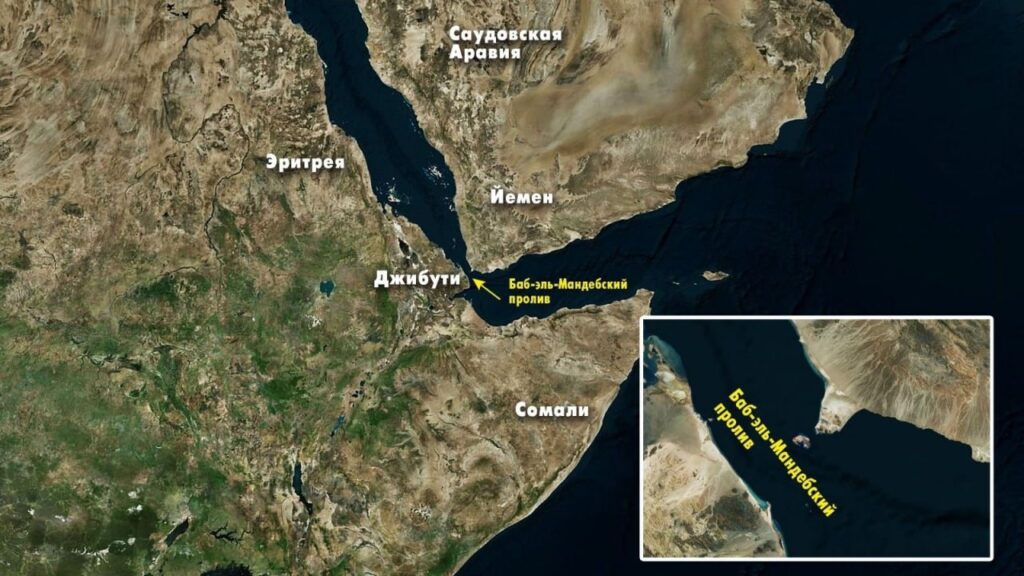
This follows Israel’s recognition of Somaliland, raising tensions around a key global shipping route
Somalia has announced a ban on Israeli-linked vessels passing through the Bab el-Mandeb Strait, escalating a diplomatic dispute tied to the status of Somaliland. The decision, reported in late April 2026, comes in response to Israel’s formal recognition of Somaliland as an independent state.
The announcement signals a sharp reaction from Mogadishu, which continues to regard Somaliland as part of its territory. Somali officials framed the move as a defense of sovereignty and a warning against what they see as foreign interference.
Recognition Sparks Diplomatic Fallout
Tensions rose after Israel became the first United Nations member state to officially recognize Somaliland in December 2025. Benjamin Netanyahu described the decision as support for Somaliland’s right to self-determination and part of a broader effort to expand diplomatic ties in strategic regions.
Somaliland, which declared independence in 1991 after the collapse of Somalia’s central government, has operated with its own institutions for decades. It maintains relative stability compared to other parts of Somalia but lacks widespread international recognition.
The Somali federal government rejected Israel’s move, calling it a violation of its territorial integrity. Officials in Mogadishu have consistently opposed any step that could legitimize Somaliland’s claim to independence.
Somalia Signals Retaliation
The proposed ban was communicated by Abdullah Mohamed Warfa, Somalia’s envoy to regional bodies. He warned that Somalia would take action against countries that interfere in its internal affairs, including restricting access to strategic waterways for Israeli-linked shipping.
The announcement specifically targets vessels connected to Israel, though details about how such links would be defined remain unclear. The statement reflects a broader effort by Somalia to respond diplomatically and symbolically to the recognition decision.
Strategic Importance of the Bab el-Mandeb
The Bab el-Mandeb Strait plays a central role in global trade. It connects the Red Sea to the Gulf of Aden and serves as a critical passage for shipping between Europe, the Middle East, and Asia. A significant share of global oil shipments and commercial goods move through this narrow corridor.
Any disruption to traffic in this area can have wide-reaching economic effects. In recent years, security concerns in nearby waters have already led to rerouting of vessels, increased insurance costs, and delays in global supply chains.
Somalia’s announcement adds another layer of uncertainty to a region that has faced growing maritime tension.

Questions Over Enforcement
Despite the strong language, analysts have raised doubts about Somalia’s ability to enforce such a ban. The country has limited naval capacity and continues to deal with internal security challenges, including the presence of al-Shabaab.
Somalia does not maintain a large or well-equipped navy capable of monitoring and controlling traffic through an international chokepoint like the Bab el-Mandeb. As a result, the move is widely viewed as a political statement rather than an immediately actionable policy.
There has also been no widely verified formal decree detailing how the restriction would be implemented. Without enforcement mechanisms, the announcement may have more diplomatic impact than operational effect.
Regional and Global Implications
The development carries implications beyond Somalia and Israel. For Somalia, it reinforces its position on territorial unity while drawing attention to the limits of its control over maritime routes and northern regions.
For Somaliland, Israel’s recognition represents a significant diplomatic milestone. Leaders in Hargeisa have welcomed the move as validation of their long-standing claim to statehood. At the same time, it has triggered criticism from regional organizations and governments that support Somalia’s territorial integrity.
For Israel, the recognition fits into a broader strategy of building partnerships in the Horn of Africa and securing access to strategic locations. Interest in ports such as Berbera highlights the importance of the region for trade and security considerations.
Shipping and logistics sectors are also watching closely. Even without enforcement, political tensions around the Bab el-Mandeb can influence risk assessments and operational decisions for companies operating in the area.
A Symbolic Move with Wider Impact
Somalia’s announcement reflects the complex intersection of sovereignty disputes, regional politics, and global trade routes. While the immediate effect on shipping remains uncertain, the decision signals a willingness to escalate diplomatically in response to actions seen as undermining national unity.
The situation continues to evolve as governments and regional bodies respond to the recognition of Somaliland and the broader implications for stability in the Horn of Africa. The Bab el-Mandeb remains a focal point, not only for trade but also for geopolitical influence.
Also Read
U.S. Airstrikes in Somalia Surge in 2026 with Limited Public Attention
USA Drone Support Boosts DRC Military Operations Against M23 Rebels