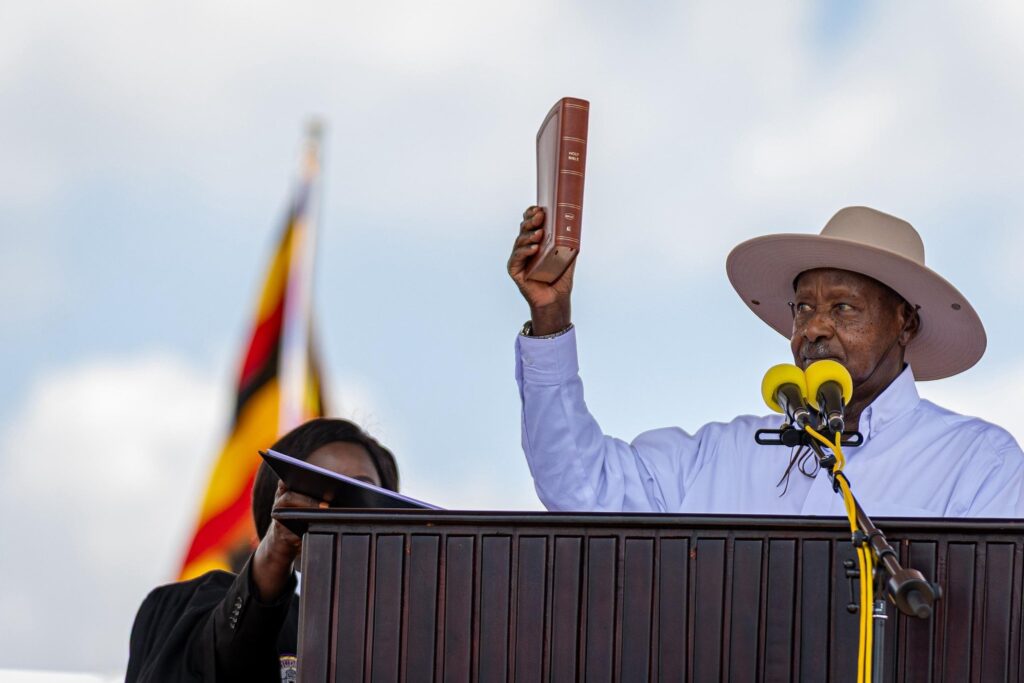
Kampala, Uganda: Yoweri Museveni officially began his seventh term in office on Tuesday following his victory in Uganda’s January 15 presidential election, where the Electoral Commission of Uganda declared him winner with 71.65% of the vote. The high-profile inauguration ceremony in Kampala attracted tens of thousands of attendees and more than 30 foreign delegations, positioning the event not only as a political transition but also as a strategic platform for regional diplomacy, investment discussions, and Uganda’s long-term economic agenda.
Held under heightened security and elaborate state protocol, the swearing-in ceremony drew an estimated 40,000 attendees and several African heads of state, underscoring Uganda’s growing geopolitical relevance within the region.
The presence of these leaders highlighted Uganda’s role in regional security, trade partnerships, and diplomatic cooperation across East and Central Africa.
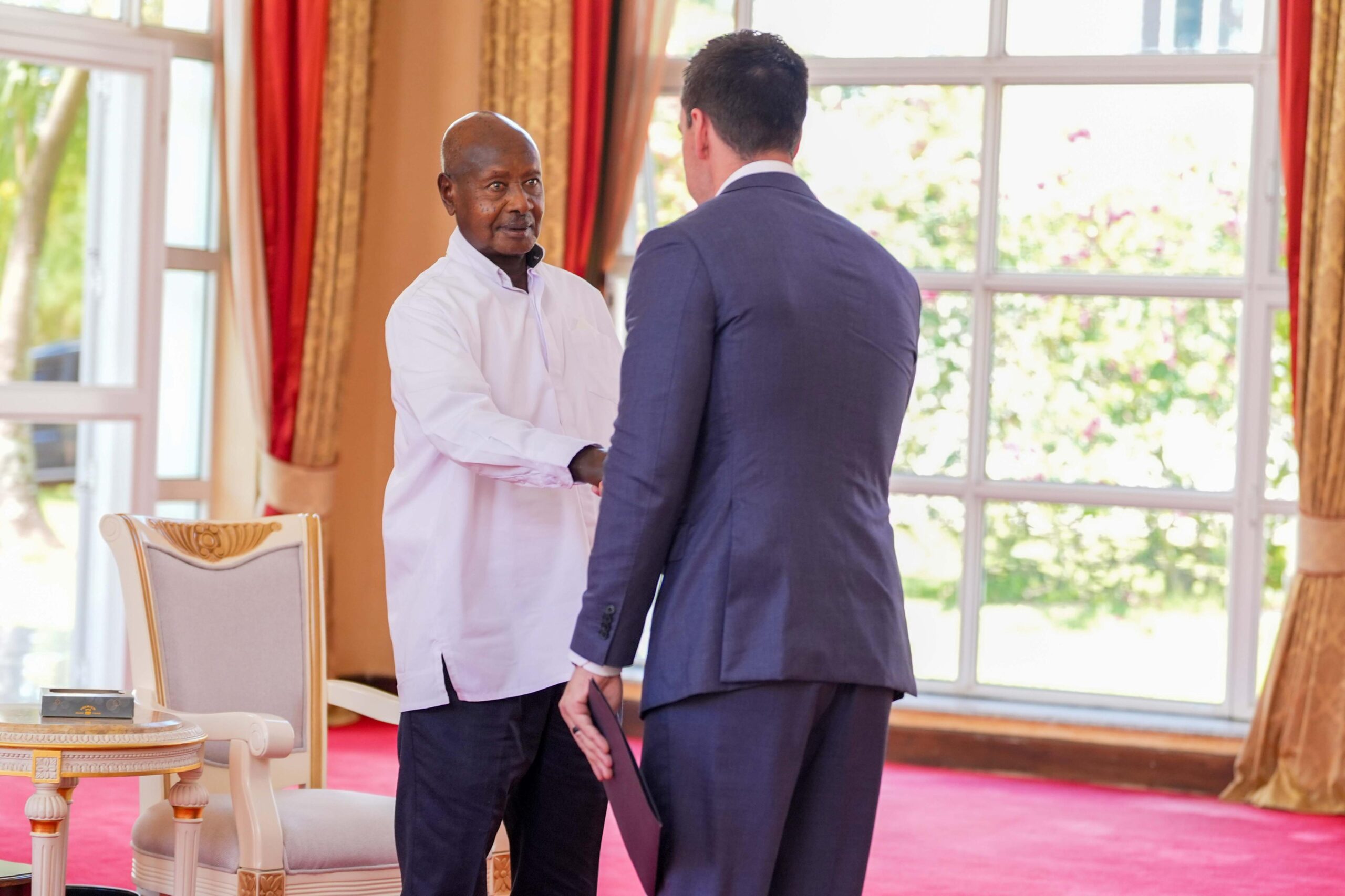
Justice Simon Byabakama formally declared Museveni the duly elected President of Uganda for the next five years following the conclusion of the general elections.
According to official results, Museveni secured 7,946,772 votes, representing 71.65% of valid ballots cast. The announcement extends his decades-long leadership, reinforcing continuity within Uganda’s political and economic framework.
However, opposition figures criticized the election process, citing alleged irregularities, violence, and concerns over democratic freedoms, issues that continue to shape political debate both locally and internationally.
The inauguration blended political symbolism with large-scale public spectacle. Festivities included a drone show displaying presidential messaging, cultural performances, and a high-profile state dinner attended by regional dignitaries and government officials.
Museveni used the occasion to praise Uganda’s strategic geography and economic potential, while also emphasizing national stability and regional collaboration. His daughter, Natasha Karugire, was among notable family members present during the celebrations.
VIDEO: Kampala’s skyline was illuminated by a stunning drone show ahead of President Yoweri Kaguta Museveni’s swearing-in ceremony.
📹@5inghbwoy #M7SwearsIn2026 #NBSUpdates pic.twitter.com/1tZMIc9rgk
— NBS Television (@nbstv) May 11, 2026
While the inauguration projected confidence and continuity, analysts note that the new term begins amid growing pressure to address youth unemployment, corruption, rising living costs, and governance concerns.
Uganda’s youthful population, one of the largest demographics in Africa, remains a central factor in shaping the country’s political and economic future. Observers say the administration’s ability to convert major infrastructure and oil investments into inclusive economic opportunities will be closely watched.
At the same time, Museveni’s long-standing role in regional peacekeeping and security cooperation continues to strengthen Uganda’s diplomatic leverage across East Africa.
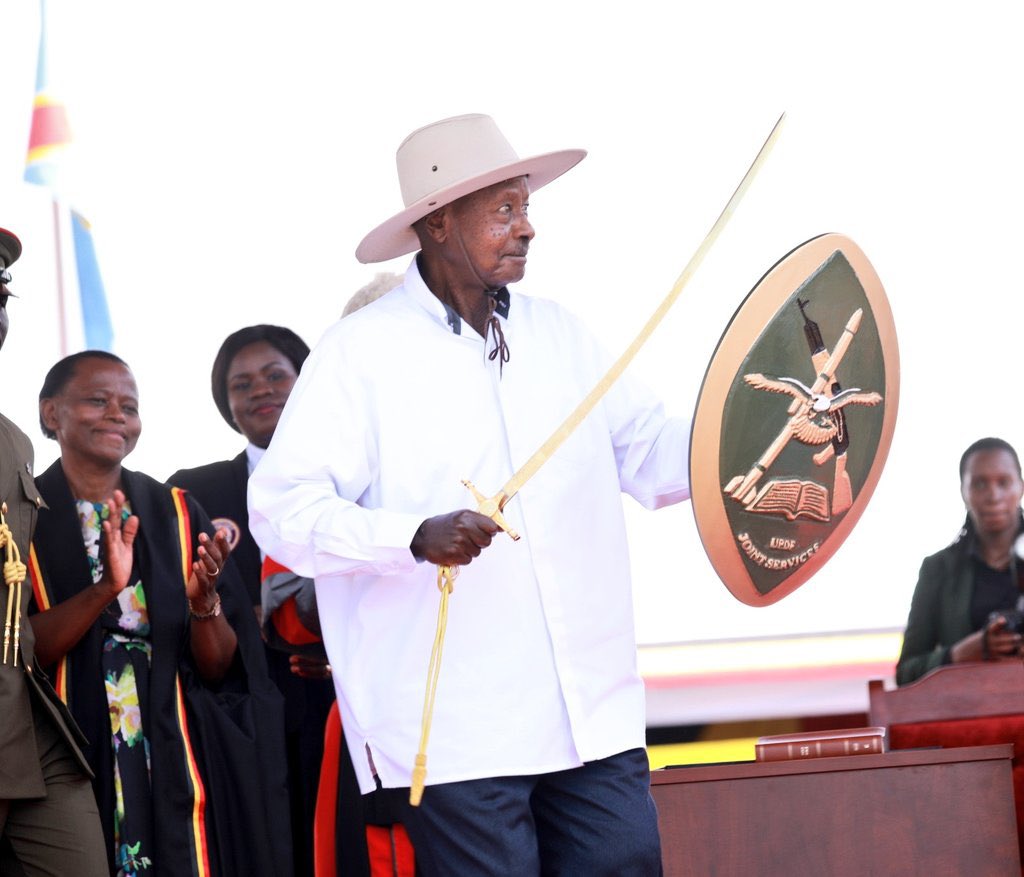
President Museveni’s seventh inauguration marks another defining chapter in Uganda’s political history. As the country positions itself for oil production, deeper regional integration, and economic transformation, the new administration faces both opportunity and scrutiny. The coming years are likely to test whether Uganda can successfully balance political stability, economic expansion, and growing public expectations in an increasingly competitive regional landscape.
ALSO READ
Museveni to Be Sworn in for Seventh Term on May 12 at Kololo Ceremonial Grounds
President Museveni Takes Over as Chairperson of the East African Community Summit