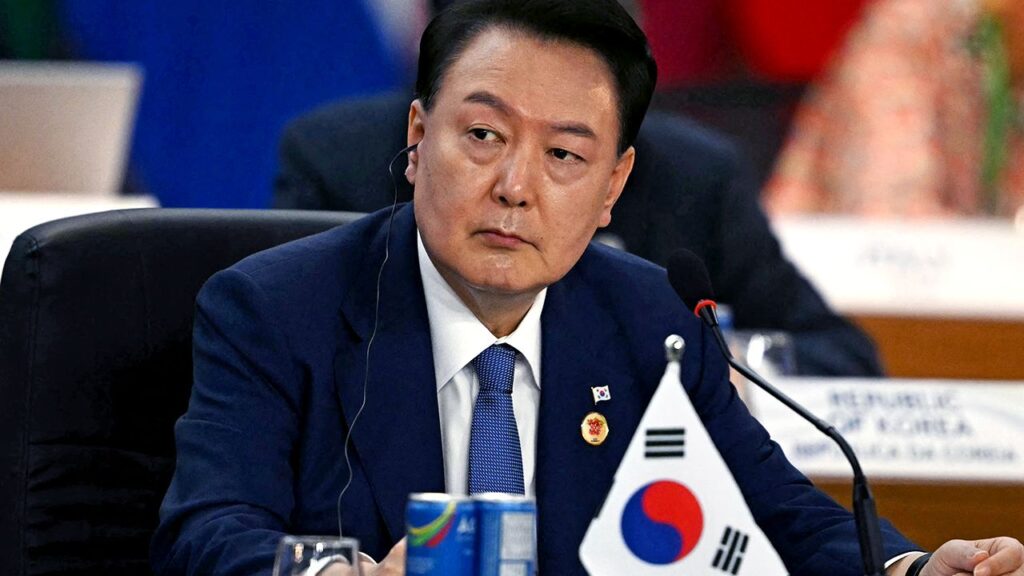
Former South Korean president Yoon Suk Yeol has been sentenced to life imprisonment after being convicted over his role in an insurrection linked to his declaration of martial law in 2024. The ruling was delivered on February 19, 2026, by the Seoul Central District Court, marking one of the most dramatic political judgments in the country’s modern history.
Yoon, 65, was found guilty of masterminding an attempt to undermine the constitutional order following his abrupt martial law announcement on December 3, 2024. Under South Korean law, the offense carries a maximum penalty of death or life imprisonment. Prosecutors had sought the death penalty, arguing his actions posed a serious threat to democracy, but the court opted for life imprisonment, citing factors such as the short duration of the martial law and limited use of force.
Background to the Crisis
The political turmoil began when Yoon declared emergency martial law amid escalating tensions with an opposition controlled parliament and growing political pressure on his administration. Security forces were deployed around the National Assembly, and there were plans to detain political opponents. However, lawmakers reconvened within hours and voted to overturn the order, forcing the decree to be lifted after about six hours.
The fallout was swift. Yoon was impeached on December 14, 2024, and later removed from office by the Constitutional Court in April 2025. He subsequently faced multiple criminal proceedings, including an earlier five year prison sentence in January 2026 on charges such as abuse of power and obstruction of justice. The insurrection conviction represents the most serious case against him.
Sentences for Former Officials
Several senior officials linked to the events also received prison terms. Former Defense Minister Kim Yong hyun was sentenced to 30 years, former Prime Minister Han Duck soo received 23 years, and former Interior Minister Lee Sang min was handed a seven year sentence. The rulings highlight the broad legal consequences for those involved in the attempted martial law.
Public Reaction
The verdict has sharply divided opinion in South Korea. Supporters gathered outside the court in protest, with some calling the decision politically motivated. Yoon himself described the ruling as predetermined and suggested it was driven by political revenge, although his legal team is reviewing options for appeal.
Critics and many observers, however, welcomed the outcome as a strong affirmation of democratic accountability and the rule of law. International human rights organizations noted the significance of holding a former president accountable while also raising concerns about the earlier push for capital punishment.
Yoon remains in detention and will serve his life sentence unless a successful appeal changes the outcome. The case continues to reflect deep political divisions and ongoing debates about democratic stability and judicial independence in South Korea.