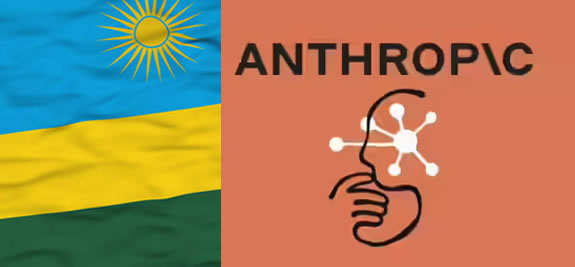
In a landmark move for Africa’s digital future, Anthropic has signed a Memorandum of Understanding (MOU) with the Government of Rwanda marking the first partnership of its kind between the AI company and an African nation. The agreement aims to accelerate the responsible adoption of artificial intelligence across Rwanda’s public sector, with a strong focus on healthcare, education, and digital governance.
A Strategic Leap into Africa
The partnership signals a growing recognition of Africa as a serious player in the global AI ecosystem. For Rwanda, often described as one of the continent’s most tech-forward nations, the collaboration reinforces its ambition to position itself as a regional innovation hub.
Over the past decade, Rwanda has invested heavily in digital infrastructure, e-government systems, and innovation-friendly policies. Teaming up with Anthropic a company known for building advanced AI systems with a focus on safety and ethical deployment—fits squarely within the country’s broader digital transformation strategy.
This MOU represents more than a symbolic handshake. It lays the groundwork for practical AI integration into critical public services.
Transforming Healthcare Delivery
One of the most promising areas of collaboration is healthcare. AI tools could support medical professionals by improving diagnostics, streamlining patient data management, and assisting in disease surveillance.
In a country where access to specialists can sometimes be limited outside major cities like Kigali, AI-powered decision-support systems may help bridge gaps between urban and rural healthcare facilities. From analyzing medical records to optimizing supply chains for essential medicines, AI could play a crucial role in enhancing efficiency and outcomes.
If implemented responsibly, such tools could reduce administrative burdens on health workers and allow them to focus more directly on patient care.
Re imagining Education Through AI
Education is another cornerstone of the agreement. AI systems can be used to personalize learning experiences, provide intelligent tutoring support, and assist teachers with lesson planning and student assessments.
In classrooms across Rwanda, AI-driven tools could help identify learning gaps early, tailor content to different proficiency levels, and expand access to high-quality educational resources. For a country with a young and rapidly growing population, this has significant long-term implications.
By embedding AI into its education system, Rwanda could equip its students with future-ready digital skills while also improving overall academic performance.
Strengthening Public Sector Efficiency
Beyond healthcare and education, the partnership is expected to explore AI applications in public administration. From automating routine government processes to enhancing data-driven decision-making, AI could streamline operations and improve service delivery.
Smart digital assistants could help citizens access government services more easily, while analytics tools could enable policymakers to make informed decisions based on real-time data insights.
Importantly, the collaboration emphasizes responsible AI use. Anthropic has built its reputation around AI safety and alignment, and this focus is likely to shape how systems are deployed within Rwanda’s public sector.
Setting a Precedent for Africa
This MOU could serve as a blueprint for other African nations seeking to harness AI in public services. Rather than importing technology without oversight, Rwanda’s approach centers on partnership, governance, and long-term capacity building.
The agreement also highlights a shift in how global AI companies view emerging markets not merely as consumers of technology, but as strategic partners in shaping its development and application.
As AI continues to transform economies worldwide, the Anthropic–Rwanda partnership may well mark the beginning of a new chapter for Africa’s role in the global tech landscape.
If successful, it won’t just modernize public services—it could redefine how innovation partnerships between tech companies and African governments are structured in the years ahead.