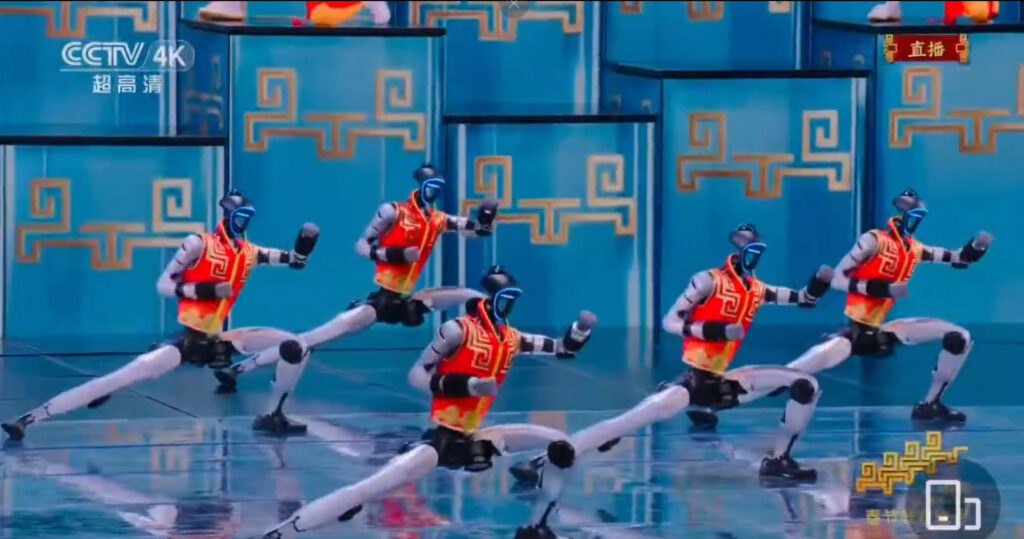
When millions tuned in to the annual CCTV Spring Festival Gala, few expected one of the night’s most talked-about performances to come from a humanoid robot. Yet that is exactly what happened when a robot developed by Unitree Robotics delivered a breathtaking martial arts display that blurred the line between science fiction and cultural celebration.
The Spring Festival Gala, often described as the world’s most-watched television event, has long been a stage for China’s finest dancers, singers, and martial artists. This year, however, innovation took center stage. The Unitree robot stepped into the spotlight not as a novelty, but as a performer capable of executing precise, fluid, and powerful kung fu movements with astonishing control.
From the opening stance, the robot demonstrated balance and coordination that rivaled trained human practitioners. It performed sharp punches, sweeping kicks, and low stances characteristic of traditional Chinese martial arts. Each movement appeared deliberate and controlled, powered by advanced motors and real-time motion algorithms. The seamless transitions between techniques showcased not only mechanical engineering excellence but also sophisticated AI-driven motion planning.
What made the performance especially compelling was the fusion of heritage and high technology. Martial arts in China are deeply symbolic, representing discipline, strength, and cultural pride. Seeing a humanoid robot embody these qualities on such a prestigious stage felt like a statement about the country’s technological ambitions. It was not merely about showing off hardware; it was about presenting robotics as an extension of human creativity and tradition.
Behind the scenes, the feat required years of research and refinement. Unitree Robotics, known globally for its quadruped and humanoid robots, has been steadily advancing locomotion stability and dynamic control systems. Martial arts movements are complex because they involve rapid shifts in weight distribution, sudden bursts of force, and intricate joint coordination. For a robot to perform these without losing balance requires highly responsive sensors and finely tuned actuators working in perfect harmony.
Audience reactions quickly flooded social media. Viewers expressed amazement at how natural the robot’s movements appeared. Some described it as a glimpse into the future of performance art, while others saw it as a symbol of China’s accelerating leadership in robotics innovation. Clips of the martial arts routine circulated widely online, extending the gala’s impact far beyond the television broadcast.
The performance also sparked broader conversations about the evolving role of robots in society. While industrial and service robots are already integrated into many sectors, seeing a humanoid robot perform an art form traditionally associated with human mastery adds a new dimension. It suggests a future where robots may collaborate in entertainment, education, and even cultural preservation.
At its core, the Unitree martial arts display was more than a technical showcase. It was a cultural moment. The Chinese New Year Gala celebrates renewal, progress, and unity. By featuring a robot performing ancient martial arts, the event highlighted a powerful narrative: respect for tradition can coexist with bold technological advancement.
As robotics continues to evolve, performances like this may become more common. Yet this particular moment will likely be remembered as a milestone. The image of a humanoid robot executing disciplined kung fu techniques under the bright lights of the Spring Festival stage symbolizes a world where innovation and culture move forward together.
In a single performance, Unitree demonstrated that robots are no longer confined to factories and laboratories. They can step onto the grandest cultural stages and command attention, not just as machines, but as participants in a shared human story of creativity and progress.