
Surge in gilt yields reflects market anxiety over oil shocks and economic outlook
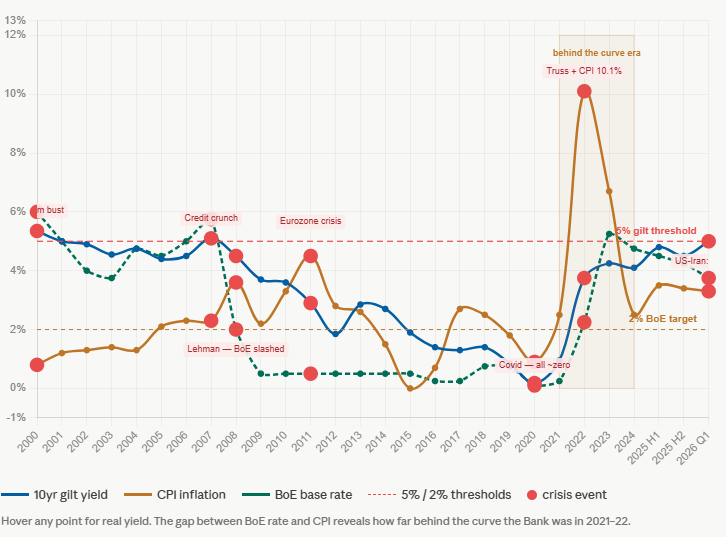
Long-term borrowing costs in the United Kingdom rose sharply on Tuesday, reaching levels not seen since 1998. Yields on 30-year government bonds, known as gilts, climbed above 5.7 percent during trading, signaling growing concern among investors about inflation and fiscal stability.
The rise also affected shorter-term debt. The 10-year gilt yield moved toward levels last seen during the Global Financial Crisis, highlighting the scale of the market reaction.
What Rising Yields Mean
Higher yields increase the cost of borrowing for the government. To attract investors, the UK must offer higher returns on new debt, which raises the overall cost of servicing its national obligations.
This shift does not stay within government finance. It spreads across the economy by pushing up mortgage rates, business loan costs, and other forms of credit. As borrowing becomes more expensive, spending and investment often slow.
Energy Shock Linked to Hormuz Crisis
The immediate driver behind the surge lies in the worsening situation in the Strait of Hormuz. The waterway carries a significant share of global oil supply, and recent tensions tied to Iran have disrupted flows.
Oil prices have risen sharply as a result. Higher energy costs feed directly into inflation, affecting transport, manufacturing, and household expenses. Markets now expect inflation to remain elevated for longer than previously anticipated.
Pressure on Monetary Policy
The outlook complicates decisions for the Bank of England. With inflation risks rising, expectations for interest rate cuts have weakened. Investors now anticipate that borrowing costs could stay high for an extended period.
This creates the risk of stagflation, where inflation remains high while economic growth slows. Such conditions limit the options available to policymakers.
Domestic Challenges Add to Concerns
The UK entered this period with existing economic pressures. Public borrowing remains high, and inflation had already proven difficult to control. Under Chancellor Rachel Reeves, fiscal policy has faced close scrutiny from markets.
Investors are demanding higher returns to compensate for perceived risks. These include uncertainty over inflation, potential policy responses, and the long-term path of government debt.
Impact on Households and Markets
Rising yields often translate into higher mortgage rates, which can slow activity in the housing market. Businesses may delay investment as financing costs increase.
Financial markets have also reacted. Stocks have faced selling pressure, and the British pound has shown signs of weakness during periods of volatility.
Outlook Remains Uncertain
Future movements in borrowing costs will depend largely on developments in the Middle East. A reduction in tensions around the Strait of Hormuz could ease oil prices and bring some relief to bond markets. Continued disruption would likely sustain inflationary pressure and keep yields elevated.
The recent surge highlights how global energy events can shape domestic economic conditions. For the UK, exposure to imported energy leaves it sensitive to shocks beyond its borders, with direct consequences for borrowing, growth, and financial stability.
Also Read
UK to Host 35-Nation Emergency Meeting to Reopen Strait of Hormuz Amid Iran Conflict
UK Parliament Clashes Over New Immigration Rules Introduced in March 2026