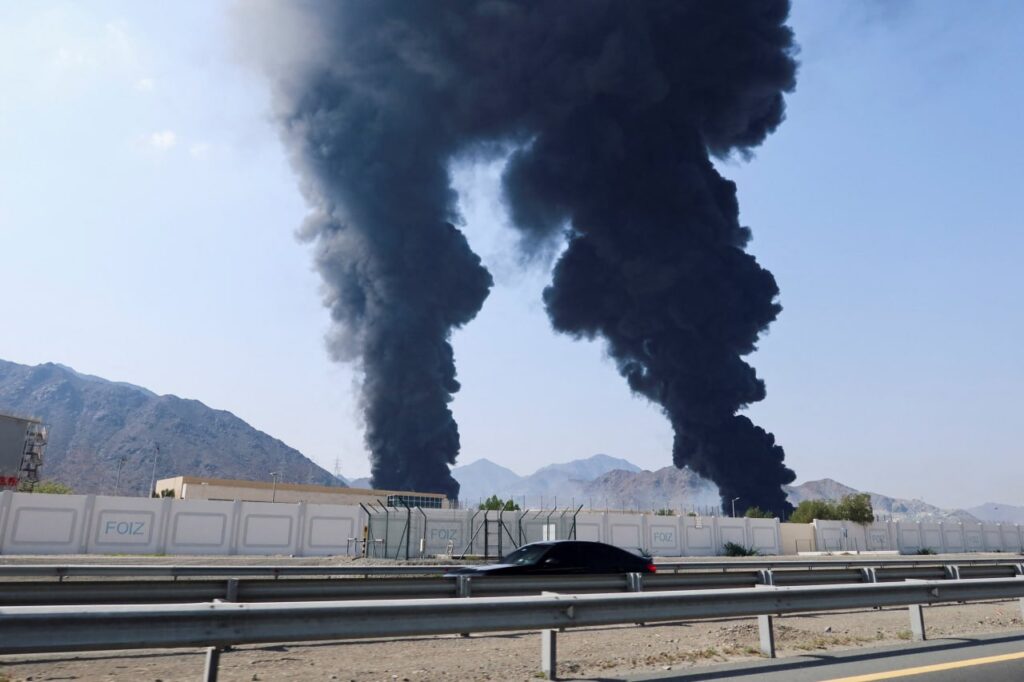
Fire breaks out at key UAE energy hub during renewed aerial attacks
On May 4, 2026, the United Arab Emirates faced a new wave of aerial attacks attributed to Iran. The strikes marked another phase in the ongoing regional conflict and placed critical energy infrastructure under direct threat. The most serious incident occurred in Fujairah, a major hub for oil storage and exports.
A fire broke out at the VTTI oil terminal located within the Fujairah Oil Industry Zone. This facility plays a central role in global oil supply chains. It is jointly owned by Vitol Group, IFM Global Infrastructure Fund, and Abu Dhabi National Energy Company.
Air Defense Response and Damage Assessment
Authorities in the UAE confirmed that drones and missiles triggered the incident. Air defense systems intercepted several incoming threats over territorial waters. Reports indicate that three missiles were destroyed while another fell into the sea. Despite these interceptions, either debris or a direct strike caused a blaze at the terminal.
Emergency response teams moved quickly to contain the fire. Operations at several storage facilities, including those linked to VTTI and Vopak, were temporarily halted. Officials reported three injuries involving Indian nationals, with no fatalities confirmed.
Naval Tensions in the Strait of Hormuz
The attacks coincided with rising tensions in the Strait of Hormuz, a critical route for global oil shipments. The United States Central Command stated that US forces engaged Iranian vessels in the area. American helicopters targeted and sank six small boats that posed a threat to shipping.
Iran also launched drones and missiles toward vessels in the strait. US forces intercepted these attacks and rejected claims that any American warships were hit. Reports indicated that a South Korean tanker and a vessel linked to ADNOC encountered disruptions during the incident.
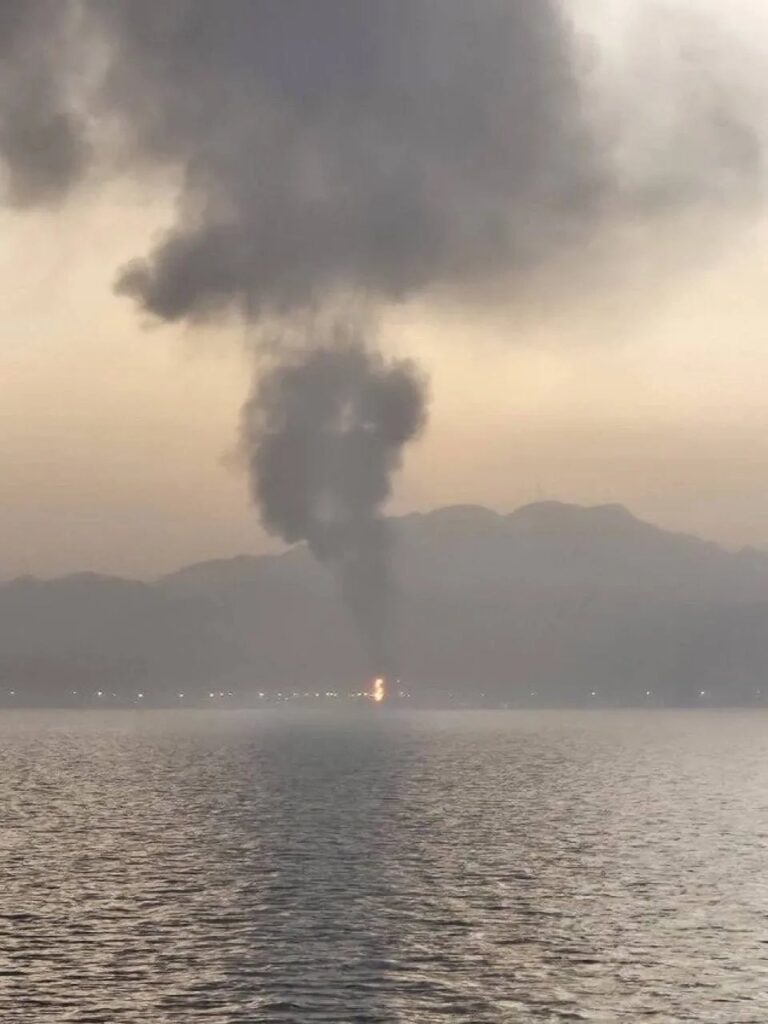
Strategic Importance of Fujairah
Fujairah holds a key position in global energy logistics. It allows oil exports to bypass the Strait of Hormuz, reducing reliance on the narrow passage. The emirate hosts one of the largest oil storage and bunkering facilities in the world. Repeated strikes on this location show a clear focus on disrupting energy flows and applying pressure on Gulf economies.
The attack follows a ceasefire reached in April after earlier exchanges involving the US, Israel, and Iran. The latest strike signals a breakdown of that agreement and a return to direct confrontation affecting regional infrastructure.
Market Reaction and Global Impact
Oil markets responded quickly to the developments. Prices for Brent crude rose sharply, nearing 115 dollars per barrel as concerns grew over supply disruptions. Shipping and insurance costs in the region are also expected to increase as risks to maritime routes intensify.
Narendra Modi condemned the attack following reports that Indian nationals were injured. The incident has drawn attention from global leaders due to its impact on trade and energy security.
Ongoing Uncertainty in the Gulf
Iranian state media described the strikes as a response to US military activity in the region. The UAE and the US maintained that their actions focus on defense and ensuring safe navigation. The situation remains unstable, with both sides signaling readiness to respond to further threats.
The events of May 4 highlight the vulnerability of energy infrastructure in the Gulf. Even limited damage can disrupt markets and raise tensions across multiple fronts. As military activity continues in and around the Strait of Hormuz, the risk of further escalation remains high.
Also Read
Zug Emerges as a Safe Haven for Wealth Amid Escalating Iran Conflict