Istanbul Park rejoins the calendar after years away, bringing back one of the sport’s most demanding circuits
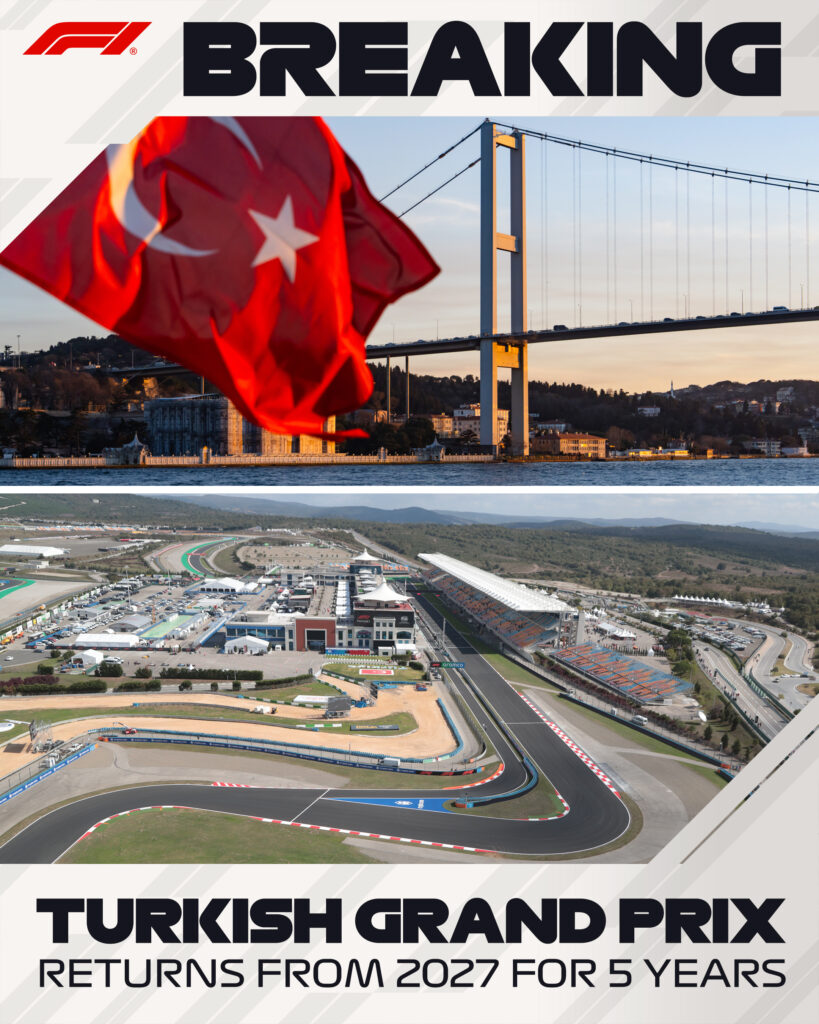
Formula 1 will bring back the Turkish Grand Prix in 2027, marking a major return for a circuit that has built a strong reputation among drivers and fans. The agreement, announced on April 24, 2026, secures the race’s place on the calendar for at least five years, running through 2031. The deal comes through a partnership between Formula 1 and Türkiye’s Ministry of Youth and Sports.
The race will take place once again at Istanbul Park, located on the outskirts of Istanbul. Its return reflects a broader effort by Formula 1 to maintain a balance between new markets and established circuits that have proven their value over time.
A Circuit with a Strong Legacy
Istanbul Park first joined the Formula 1 calendar in 2005 and remained a regular venue until 2011. Designed by renowned circuit architect Hermann Tilke, the track quickly earned a reputation as one of the more technical and demanding layouts in modern Formula 1.
The 5.338 km circuit challenges drivers with a mix of high-speed sections and technical corners that require consistent precision. Its layout rewards skill and control rather than relying solely on straight-line speed. Among its defining features is Turn 8, a long, sweeping left-hander that places heavy physical demands on drivers due to sustained lateral forces.
Turn 8 has often drawn comparisons to Eau Rouge at Circuit de Spa-Francorchamps. Both corners demand commitment and confidence, though Istanbul Park’s version extends the challenge over multiple apexes, making it unique on the calendar.
Memorable Comebacks During the Pandemic
After leaving the calendar in 2011 due to financial and contractual issues, the Turkish Grand Prix returned briefly in 2020 and 2021. Those editions came as Formula 1 reshaped its schedule during the global disruption caused by COVID-19.
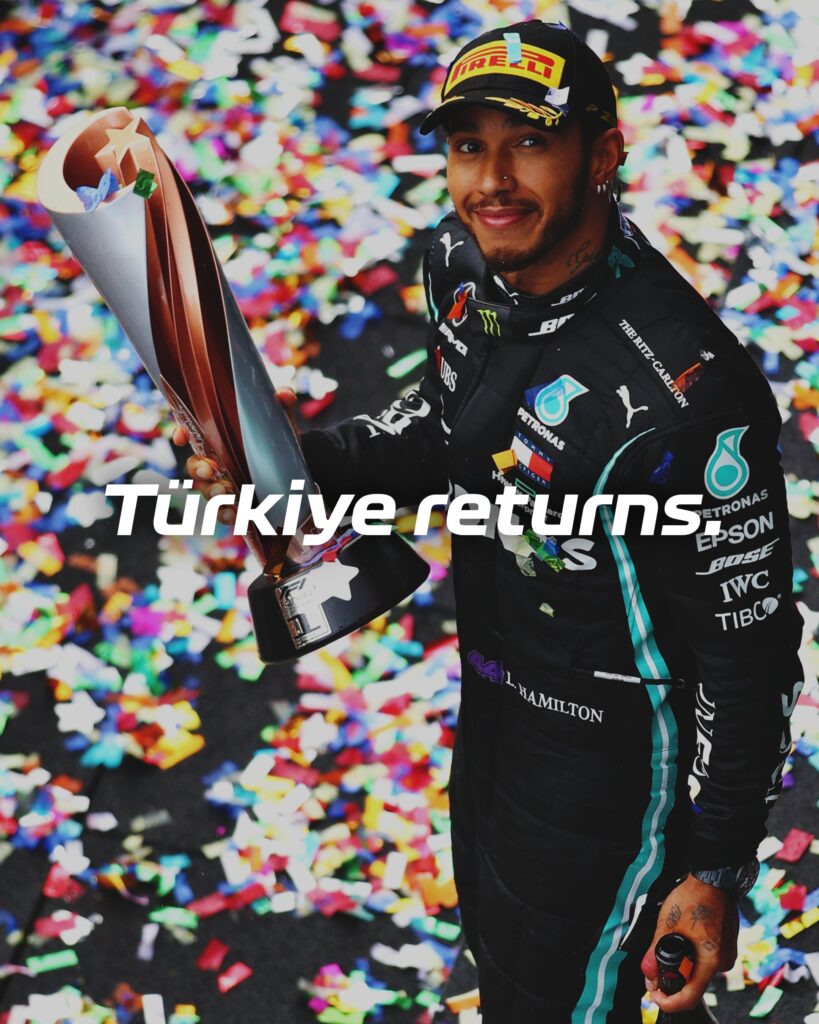
The 2020 race stood out for its dramatic conditions. Rain transformed the circuit into a slippery surface that tested every driver on the grid. During that race, Lewis Hamilton secured his seventh world title, matching a historic record. Valtteri Bottas took victory in a race defined by unpredictable grip levels and strategic challenges.
The following year also delivered strong racing, reinforcing the circuit’s reputation as a venue that rewards driver ability and adaptability.
Why Formula 1 Is Bringing It Back
Formula 1 has expanded its global reach in recent years, adding new races in different regions while managing a calendar that now approaches its maximum capacity. The return of Istanbul Park signals a clear intention to retain circuits that consistently produce competitive racing.
Stefano Domenicali has spoken about the importance of maintaining high-quality venues within the calendar. Istanbul Park fits that approach as a permanent facility with a proven track record, unlike some temporary street circuits that dominate newer additions.
Support from Turkish authorities played a key role in securing the agreement. Recep Tayyip Erdoğan described the deal as a reflection of the country’s commitment to international sport. The long-term structure of the agreement provides stability and avoids the uncertainty that previously affected the race’s position.
For Formula 1, the return also strengthens its presence in a region that connects Europe and the Middle East. This strategic positioning adds value to the calendar while maintaining diversity in track design and racing conditions.
What Fans and Teams Can Expect
The return of the Turkish Grand Prix brings expectations of competitive racing shaped by the circuit’s layout. Drivers will once again face the challenge of Turn 8, where maintaining speed while managing tire wear becomes a critical factor.
Weather could also play a role. Istanbul’s climate has shown the ability to shift conditions quickly, as seen during the 2020 race. Rain or cooler temperatures can change grip levels and introduce uncertainty into race strategies.
Local support is expected to be strong. Motorsport interest in Türkiye has grown in recent years, and previous races at Istanbul Park have drawn engaged crowds. The atmosphere around the event could add to the experience for teams and fans alike.
A Return That Adds Depth to the Calendar
The reintroduction of the Turkish Grand Prix gives Formula 1 a circuit that combines technical complexity with a history of producing memorable races. Its inclusion from 2027 onward provides continuity and variety within a calendar that continues to evolve.
The exact date for the 2027 race has not yet been confirmed, but teams will prepare for its return as they adapt to ongoing technical changes in the sport. By the time the race takes place, Formula 1 will have entered a new phase shaped by updated regulations and shifting team dynamics.
Istanbul Park’s comeback offers more than nostalgia. It restores a track that challenges drivers in ways that remain rare in modern Formula 1. With a secured place on the calendar, the Turkish Grand Prix is set to play a significant role in the sport’s next chapter.
Also Read
ZXMOTO Puts China on Top of the World with Sensational Double Victory at Portimão