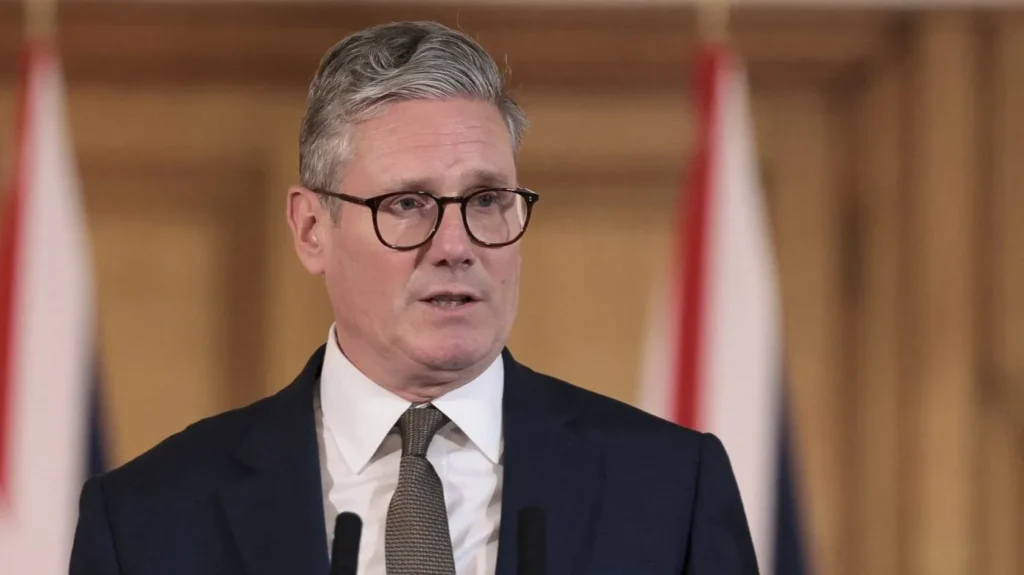
As the United States and Israel press into the fifth day of sustained airstrikes on Iran, the United Kingdom has taken a markedly different stance declining to participate in the offensive campaign while limiting its involvement to defensive operations.
Explosions have rocked Tehran in recent days, while Iranian missiles and drones have targeted sites across the Gulf. Yet despite being one of Washington’s closest allies, Britain has drawn a clear boundary around its military role.
Prime Minister Keir Starmer has publicly and repeatedly emphasized that the UK is not part of the offensive. On February 28, 2026 the day the joint US-Israeli operation began Starmer stated that Britain “played no role in these strikes.” He later reinforced the message, declaring that the UK would not join offensive action while continuing defensive measures to protect British personnel and regional allies.
Rejecting Use of British Bases for Assault
At the heart of the diplomatic tension is Britain’s refusal to allow its sovereign bases to be used for the main assault. The government reportedly declined requests from President Donald Trump to use RAF Fairford in Gloucestershire and Diego Garcia in the Indian Ocean as staging grounds for offensive operations.
Trump publicly expressed disappointment, suggesting that legal concerns influenced the UK’s hesitation. The disagreement has introduced friction into what is traditionally described as a “special relationship,” though operational coordination continues in other areas.
Defensive Yes, Offensive No
While rejecting offensive strikes, Britain’s military remains active in the region in a defensive capacity. Royal Air Force Typhoon and F-35 fighter jets are flying missions aimed at intercepting Iranian missiles and drones targeting UK allies and British personnel.
UK-linked facilities in Bahrain, Qatar, and Cyprus have reportedly faced Iranian threats or attacks. In response, Starmer authorized limited cooperation with U.S. forces for narrowly defined defensive objectives specifically targeting missile launchers and storage sites to prevent imminent strikes.
The government has anchored this approach in international law, citing Article 51 of the UN Charter, which permits collective self-defense against ongoing armed attacks. Officials argue that the distinction between defensive protection and offensive warfare is deliberate and legally significant.
Starmer has also ruled out broader ambitions such as regime change. “We do not believe in regime change from the skies,” he has stressed, framing Britain’s actions as focused solely on protecting lives and containing escalation.
Lessons from Iraq and Domestic Pressure
The UK’s caution reflects historical memory as well as current political realities. Starmer has referenced “the mistakes of Iraq,” recalling Britain’s controversial participation in the 2003 US-led invasion a decision that carried lasting domestic and international consequences.
Within Parliament, lawmakers from Labour, the Liberal Democrats, and the Scottish National Party have called for scrutiny of any deeper involvement. Public appetite for another Middle Eastern conflict remains limited, and the government appears sensitive to both legal and political risks.
Strategically, Britain also faces a balancing act. It maintains close intelligence and operational ties with both the United States and Israel, with British personnel embedded alongside American forces at Gulf bases. At the same time, European partners such as France and Germany have similarly opted to restrict their roles to defensive measures, reinforcing a broader European reluctance to escalate the conflict.
A Strained but Functional Alliance
Despite public tensions, cooperation between London and Washington continues. British aircraft remain in the skies alongside American forces, intercepting threats rather than launching strikes into Iranian territory.
As the conflict expands drawing in Lebanon, threatening shipping routes through the Strait of Hormuz, and rattling global energy markets Britain’s position remains consistent: defend allies, protect British assets, and avoid joining the offensive war effort.
Whether that stance can be maintained if hostilities intensify or if British interests come under direct and sustained attack remains uncertain. For now, however, the message from Downing Street is unequivocal: the United Kingdom is not part of the US-Israel offensive on Iran, but a defensive actor seeking to prevent a wider regional war.