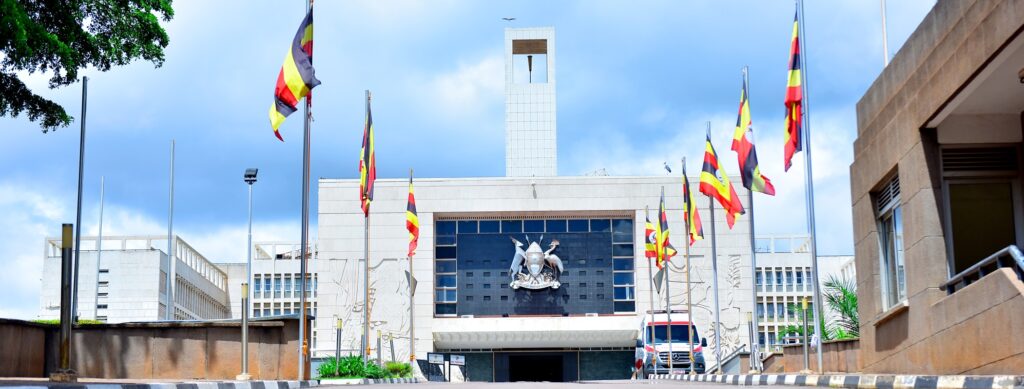
A New Bill at the Center of National Attention
Uganda’s political landscape is once again under the spotlight with the introduction of the Protection of Sovereignty Bill, 2026, a proposed law that seeks to regulate foreign influence across key sectors of the country.
Commonly referred to as the Sovereignty Bill or National Sovereignty Bill, the legislation is positioned by the government as a critical step toward safeguarding Uganda’s independence. The bill is expected to be tabled for its first reading in the Parliament of Uganda on April 15, 2026, marking the beginning of what is likely to be a heated legislative process.
Government Justification and Political Backing
The bill has already received backing from the ruling National Resistance Movement caucus and Cabinet, signaling strong political momentum behind it.
Government officials, including Chief Whip Denis Hamson Obua, have framed the proposal as a necessary safeguard against external interference. According to its proponents, the legislation aims to protect Uganda’s national interests by tightening oversight on foreign funding and preventing activities that could undermine state sovereignty.
Authorities argue that increasing global interconnectedness has made Uganda vulnerable to undue foreign influence, particularly in politics, governance, and public affairs.

Key Provisions of the Proposed Law
At the core of the bill are sweeping provisions that significantly expand how foreign influence is defined and regulated.
The proposed law introduces broad definitions of who qualifies as a “foreigner,” extending beyond non-citizens to include Ugandans living abroad, international organizations, and entities designated by the Minister of Internal Affairs. It also defines “agents of a foreigner” as individuals or organizations receiving support, direction, or funding from such sources.
Under the bill, individuals and entities receiving foreign funding would be required to register with designated authorities, likely under the Ministry of Internal Affairs. Financial inflows from abroad could also be capped unless explicit approval is granted.
Additionally, the legislation proposes strict prohibitions on activities deemed to promote foreign interests against Uganda’s national priorities, particularly in areas such as elections, public order, and policymaking.
Harsh Penalties Raise Concerns
One of the most contentious aspects of the bill is the severity of its penalties.
Individuals found in violation could face fines of up to UGX 2 billion or lengthy prison sentences of up to 20 years. Organizations and companies could be penalized even more heavily, with fines reaching UGX 4 billion.
These provisions have drawn significant attention, with critics warning that the penalties are disproportionate and could be used to suppress legitimate activities.
Far-Reaching Impact Across Sectors
While initially framed as a measure targeting political interference, the bill’s scope extends far beyond traditional governance structures.
Its provisions could affect non-governmental organizations, religious institutions, charities, businesses, and even personal financial flows. In particular, concerns have been raised about its potential impact on diaspora remittances, which contribute billions of dollars annually to Uganda’s economy.
Tourism and foreign investment could also face indirect consequences if international actors perceive the regulatory environment as restrictive or unpredictable.
Opposition Voices and Civil Society Pushback
The bill has sparked strong opposition from various quarters, including civil society organizations, legal experts, and political leaders such as Joel Ssenyonyi.
Critics argue that the legislation risks shrinking civic space and undermining constitutional freedoms, including the rights to association and expression. There are also fears that it could be used to target dissenting voices and opposition groups under the guise of protecting national sovereignty.
Some analysts have gone further, describing the bill as overly restrictive and warning that it mirrors controversial “foreign agent” laws seen in other countries, while potentially going even further in scope.
Legislative Process and What Lies Ahead
As of April 15, 2026, the bill remains in its early stages. Following its first reading, it is expected to be referred to a parliamentary committee for detailed scrutiny, including public consultations and possible amendments.
This phase will be critical in shaping the final version of the law, as stakeholders from across society weigh in on its implications.
A Defining Moment for Uganda’s Governance
The Protection of Sovereignty Bill arrives at a time when Uganda is grappling with balancing national security concerns and democratic freedoms.
For supporters, it represents a proactive step to shield the country from external manipulation. For critics, it raises fundamental questions about governance, accountability, and the future of civic engagement in Uganda.
As the debate unfolds in Parliament and beyond, the bill is set to become one of the most closely watched legislative developments in the country, with far-reaching consequences for Uganda’s political and economic trajectory.
Also Read
Uganda’s Copyright Amendment Bill Sparks Heated Debate as Artists Rally for Royalty Rights
President Museveni’s UGX 100 Million ‘Handshake’ to NRM MPs Sparks Nationwide Debate