Uganda’s fast-growing digital creator space entered a new chapter on March 18, 2026, with the official launch of the Federation of Uganda Social Media Influencers Limited, widely referred to as FUSMI. The development marks a notable moment for the country’s online creator community, which has grown into a powerful force in entertainment, marketing, youth engagement, and public conversation.
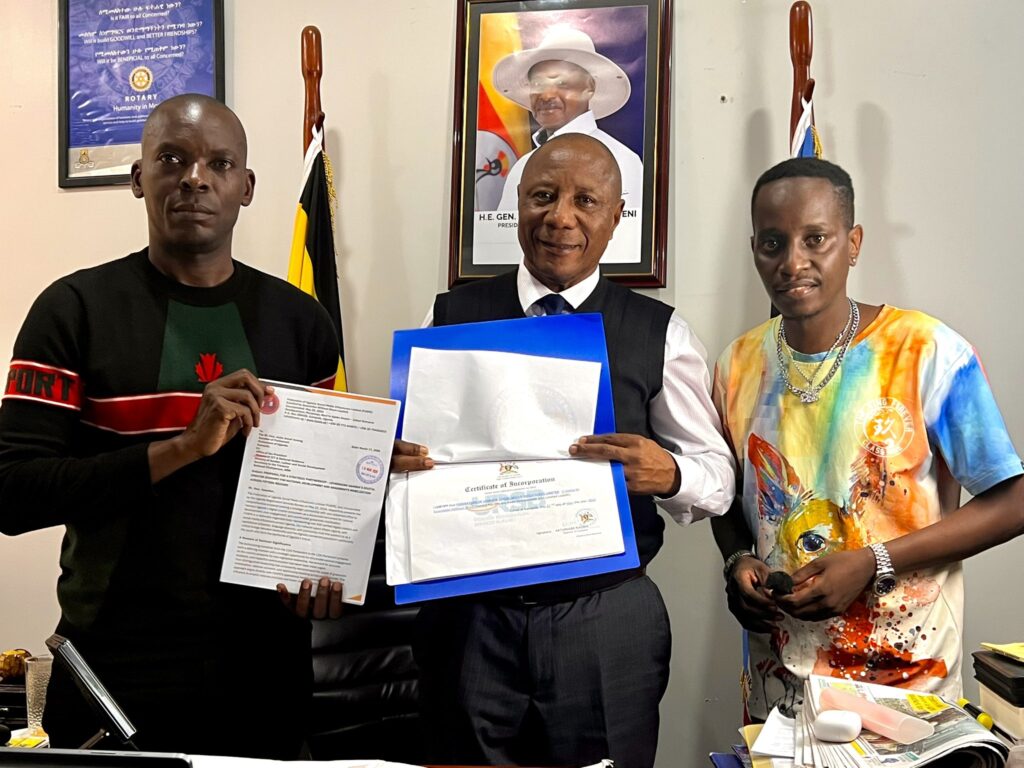
The launch was hosted by State Minister for ICT and National Guidance, Hon. Godfrey Baluku Kabyanga, signaling clear government recognition of the rising influence of content creators and social media personalities in Uganda’s digital economy. Among the key figures behind the initiative were well-known Ugandan media personality and activist MC Kats, alongside Mr. Kirabira Edson, who presented official registration documents from the Uganda Registration Services Bureau. The documents confirmed the federation’s legal status as a limited company, giving the body a formal structure as it begins its work.
That formal recognition is significant in a space that has often operated without clear organization or industry-wide representation. For years, influencers, online personalities, podcasters, videographers, and content creators have played an increasingly visible role in shaping trends, promoting brands, influencing opinion, and driving digital engagement, especially among Uganda’s youth. The creation of a federation now suggests an effort to bring that scattered energy under one umbrella, with the aim of building a stronger collective voice.
Government officials have framed the move as part of a broader push to involve young people in national development while strengthening the country’s digital ecosystem. Hon. Kabyanga emphasized the importance of engaging creators not just as entertainers, but as contributors to economic growth, civic communication, and innovation. In that sense, the federation is expected to go beyond symbolism. It is being positioned as a body that could advocate for creators, promote professionalism, encourage ethical standards, and possibly connect members to training, funding opportunities, and government programs.
The timing of the launch also matters. It comes at a moment when Uganda is showing growing interest in formalizing its digital content industry. Just weeks earlier, President Yoweri Museveni announced a public fund worth 5 billion Ugandan shillings to support influencers, videographers, podcasters, and other digital entrepreneurs. That announcement signaled that the state increasingly sees digital creators as part of a larger economic and social opportunity rather than just an informal online subculture.
Still, the launch has not been welcomed without questions. Reaction on social media has been mixed, with many praising the move as overdue and potentially beneficial for creators who have long worked without protection, standards, or bargaining power. Others, however, have responded with caution, asking who exactly belongs to the federation, how its leadership was selected, and whether it genuinely reflects the diversity of Uganda’s influencer community. Some observers have also expressed skepticism about whether the body will serve creators broadly or become another gatekeeping structure tied to a narrow circle of interests.
That tension may define the federation’s early public image. On one hand, there is real potential for it to help organize a fragmented industry, create room for self-regulation, and strengthen collaboration between creators and institutions. On the other hand, credibility will likely depend on transparency, inclusiveness, and whether the federation can prove it represents more than a few prominent names.
As internet access and social media use continue to expand across Uganda, especially among younger audiences, the stakes are only getting bigger. Issues such as monetization, brand partnerships, digital rights, misinformation, online safety, and creator protection are becoming harder to ignore. In that environment, the Federation of Uganda Social Media Influencers Limited could become an important player in shaping the future of Uganda’s creator economy.
Whether it grows into a truly inclusive platform or becomes the subject of continued debate, its launch has already pushed one issue firmly into the spotlight: Uganda’s digital creators are no longer operating at the margins, and structured representation is now part of the national conversation.