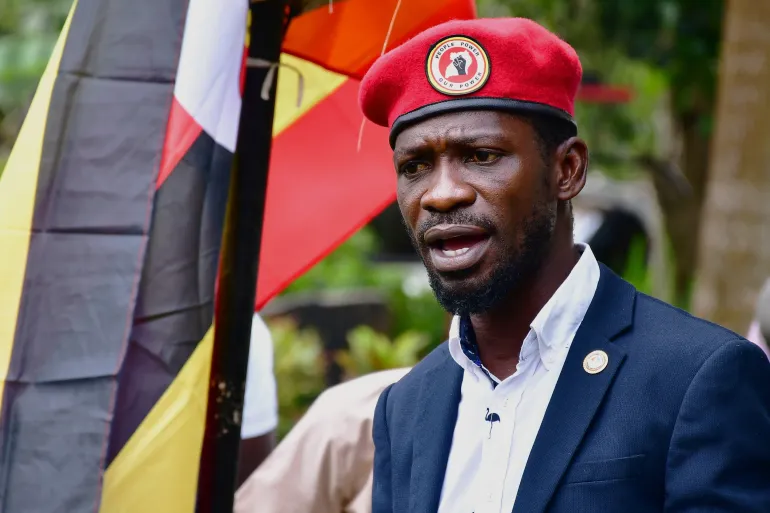
The recent detention and dismissal of former security officers assigned to protect opposition leader Robert Kyagulanyi Ssentamu, widely known as Bobi Wine, has drawn widespread attention and criticism across Uganda.
These officers, drawn from the Uganda Police Force’s Directorate of Counter-Terrorism—a unit responsible for high-risk VIP protection—were officially deployed by the Electoral Commission to safeguard Bobi Wine during his 2026 presidential campaign. Reports indicate that approximately 16 officers were assigned to his security detail.
Following the January 2026 elections, which Bobi Wine and his National Unity Platform (NUP) party have publicly disputed as fraudulent, several of these officers were arrested in early March 2026. Initial reports suggest that between five and nine officers were detained around March 6–7, primarily at the Railway Police Station in Kampala.
Police sources and statements from the Counter-Terrorism Directorate, led by AIGP David Waswa, indicated that the officers faced charges including disobedience of lawful orders, neglect of duty, and withdrawing from work without permission. Some accounts suggest the arrests arose from disputes over unpaid allowances or claims for compensation for their service during the campaign, which police leadership reportedly interpreted as insubordination.
By March 11–12, nine officers had been brought before a Police Disciplinary Court or unit and were formally dismissed from the Uganda Police Force “with disgrace.” The move has been condemned by Bobi Wine, who is currently abroad, as politically motivated retaliation. He alleged that authorities accused the officers of assisting his escape during a military raid on his Magere home on January 16, despite the officers already having been withdrawn from duty by that time.
Bobi Wine highlighted that this is part of a recurring pattern in Uganda, noting that similar arrests and interrogations targeted officers assigned to him after the 2021 elections. He described these actions as punishment for fulfilling their professional duties while protecting him amid reported threats from other security elements.
The arrests and dismissals have fueled debate over potential politicization within Uganda’s security forces and the treatment of officers performing official duties. Police have confirmed the detentions in parliamentary sessions and media statements but have not provided full details, with some officials declining to disclose holding locations without further consultation.
As of mid-March 2026, some officers, including one named Kigenyi, reportedly remain in detention and under interrogation at facilities such as the Railway Police Station. The incident has added to tensions in Uganda’s post-election environment, highlighting ongoing challenges surrounding opposition politics and security operations in the country.