A Solemn Day of Reflection Across Uganda
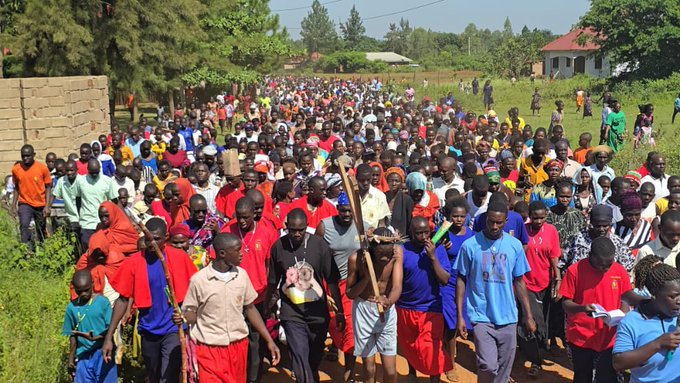
On Good Friday, April 3, 2026, Christians across Uganda gathered in churches, streets, and public spaces to commemorate the crucifixion of Jesus Christ through the Way of the Cross, also known as the Stations of the Cross or Via Crucis. The solemn devotion retraces Christ’s journey from condemnation to burial through 14 stations that emphasize sacrifice, suffering, love, and redemption.
From Kampala to Soroti, Mukono to Jinja, and Gulu to Apac, believers participated in processions, prayers, and reflections that transformed towns and church compounds into places of deep spiritual reflection. The observance highlighted both unity among Christian denominations and the unique traditions that define different churches across the country.
Catholic Church Leads Major Public Processions
The Catholic Church, one of the largest Christian communities in Uganda, organized some of the most visible and well-attended Good Friday processions.
In Kampala, large crowds gathered at Rubaga Cathedral and other Catholic centers before processing toward Old Kampala grounds for joint prayers and reflections. The Kiwamirembe Catholic Shrine also hosted a live Stations of the Cross devotion, allowing believers to participate both physically and virtually.
In Soroti, faithful gathered at Immaculate Conception Cathedral Parish for a solemn procession that was streamed live for wider participation. Jinja also witnessed prayerful processions through town streets, with Christians reflecting on Christ’s passion and sacrifice.
Parishes such as Our Lady of Africa Mbuya combined the Way of the Cross with the veneration of the Cross during the liturgy of the Lord’s Passion. Catholic observances were marked by traditional hymns like Stabat Mater, rosary prayers at each station, and strong calls for repentance and spiritual renewal.
Anglican Church of Uganda Joins in National Observance
The Church of Uganda actively participated in Good Friday devotions through both independent and joint processions.
In Apac, St. Thomas Church of Uganda held its own Way of the Cross, drawing believers into prayer and reflection. Anglican leaders also took part in ecumenical processions in several towns, including Mukono, where clergy from different denominations walked together in unity.
In Kampala, the Archbishop of the Church of Uganda, Rev. Dr. Stephen Kaziimba Mugalu, participated in leading and supporting Good Friday observances. Anglican services blended traditional liturgy with messages focused on sacrifice, unity, and national harmony.
Ecumenical Unity Through Uganda Joint Christian Council
One of the most notable aspects of Good Friday 2026 was the strong ecumenical collaboration organized under the Uganda Joint Christian Council (UJCC), which brought together Catholics, Anglicans, and Orthodox Christians in joint processions.
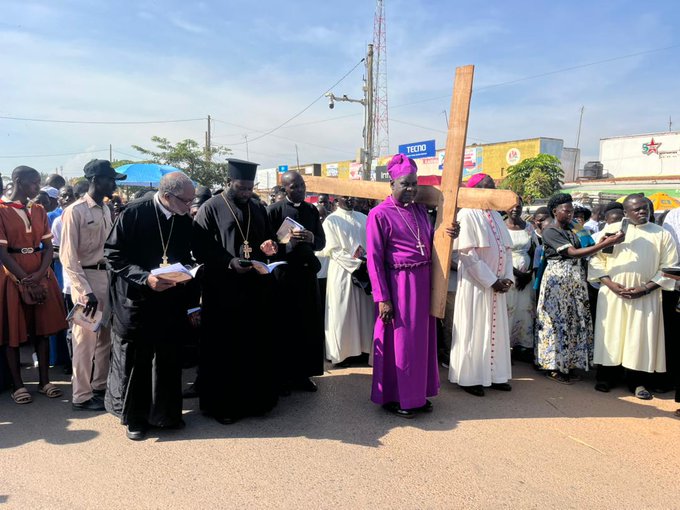
In Kampala, a major ecumenical Way of the Cross procession moved from Rubaga Cathedral and surrounding areas toward Old Kampala grounds, led by senior religious leaders including Catholic Archbishop Paul Ssemogerere, Anglican Archbishop Stephen Kaziimba Mugalu, and Orthodox representatives. Messages delivered during the procession emphasized peace, tolerance, and unity among Ugandans.
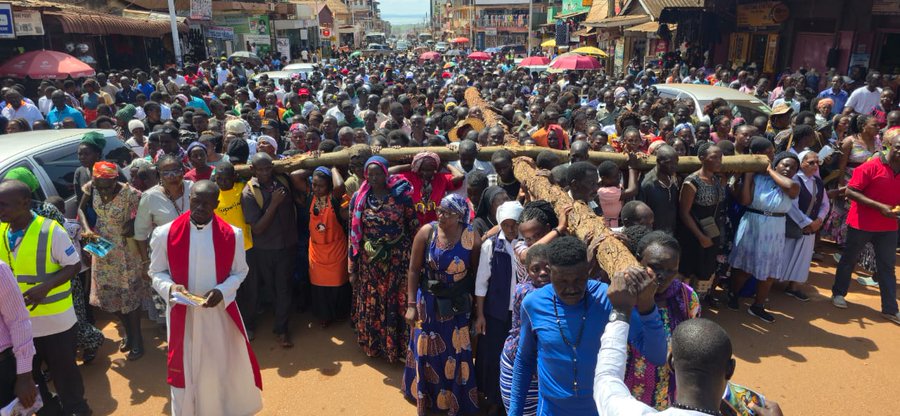
Mukono also witnessed a powerful display of unity, where bishops from the three major Christian traditions led a joint procession. Participants took turns carrying a large cross, symbolizing Simon of Cyrene helping Jesus carry His burden. Christians stopped at various points for prayers and reflections before concluding the march.
Similar joint processions took place in other towns, where believers started from their respective churches and converged at central locations for shared worship and reflection.
Orthodox and Other Denominations Participate
Orthodox Christians participated actively in ecumenical processions, particularly in Kampala and Mukono, standing alongside Catholics and Anglicans in the shared commemoration of Christ’s suffering.
In Gulu, however, the Catholic Archdiocese suspended the traditional joint Way of the Cross with other denominations due to doctrinal considerations. Catholics continued their observance privately or within their own communities, while other denominations held separate services.
Evangelical, Pentecostal, and other Protestant groups largely focused on indoor services, preaching, and worship centered on the message of the Cross. Public processions were less common among these groups, although some congregations joined ecumenical activities where possible.
Common Elements Seen Across the Country
Despite differences in organization and doctrine, the Way of the Cross across Uganda shared several common features.
Christians carried large wooden crosses through streets and church compounds, stopping at each of the 14 stations for prayers and reflections. Choirs led hymns and worship, while clergy delivered messages encouraging forgiveness, repentance, and national unity.
In some areas, dramatic reenactments were included, with participants portraying Jesus carrying the cross. Support teams, including Red Cross volunteers, were present to assist participants during long processions.
Live streaming from dioceses and shrines allowed believers who could not attend physically to take part in the spiritual observance, expanding the reach of Good Friday celebrations.
A Powerful Expression of Faith and Unity
Good Friday 2026 saw widespread participation across Uganda, with the public holiday allowing many Christians to fully engage in spiritual reflection and devotion.
The nationwide observance of the Way of the Cross once again demonstrated Uganda’s deep Christian heritage and the importance of faith in daily life. Whether through large ecumenical processions or quiet parish prayers, the day served as a powerful reminder of sacrifice, redemption, and the call for unity among believers.
The Way of the Cross continues to stand as both a spiritual tradition and a visible expression of faith, bringing communities together to reflect on Christ’s journey to Calvary and its meaning for modern society.
Also Read