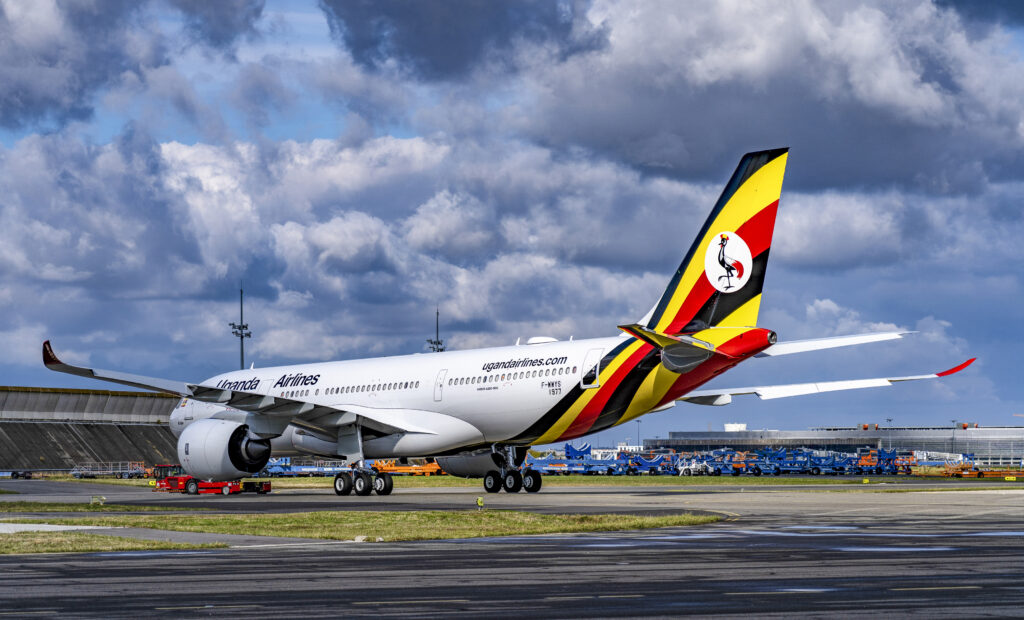
The Ugandan government is moving forward with a major fleet expansion for the national carrier, Uganda Airlines, following the approval of a significant supplementary budget aimed at acquiring new aircraft to support route expansion, improve operational reliability, and strengthen both passenger and cargo services. The move is part of a broader strategy to position the airline as a competitive regional and international carrier while boosting Uganda’s aviation and tourism sectors.
Uganda Airlines, which was relaunched in 2019, currently operates a relatively small fleet made up of two Airbus A330-800neo wide body aircraft used for long haul routes such as London, Dubai, and Mumbai, along with four Bombardier CRJ900LR regional jets serving shorter African routes. Despite steady growth in destinations, the airline has faced operational challenges, including aircraft groundings due to maintenance issues, limited capacity on certain routes, and reliance on temporary wet lease arrangements to maintain flight schedules. These challenges have led to disruptions and increased pressure on the government to strengthen the airline’s fleet.
In December 2025, Parliament approved UGX 422.26 billion in supplementary funding for the 2025/2026 financial year specifically to support fleet expansion. The funding forms part of a wider supplementary budget request of about UGX 1.696 trillion and is intended to secure production slots with aircraft manufacturers through pre delivery payments and initial deposits. The allocation is seen as a crucial first step toward acquiring new aircraft and reducing reliance on short term leasing arrangements that increase operational costs.
The expansion plan involves a phased acquisition of 10 new aircraft designed to create a balanced and efficient fleet. The proposed additions include four mid range Airbus narrow body aircraft from the A320neo and A321neo family to bridge the gap between regional CRJs and long haul A330s, four wide body Boeing aircraft including two Boeing 787 Dreamliners for long haul passenger routes, and two Boeing converted freighters to strengthen cargo operations. The approved UGX 422 billion will specifically cover two Boeing 787 passenger jets, one Boeing freighter, two mid range Airbus aircraft, and interim leasing costs required to maintain operations during the transition period.
Government officials say the mixed fleet strategy is intended to enhance route flexibility and operational efficiency while supporting long term growth. Discussions with Airbus and Boeing have been ongoing for some time, with plans to introduce additional intercontinental routes including possible connections to Asia and China. Deliveries of some aircraft, particularly narrow body Airbus jets, may take several years depending on production schedules and contract negotiations.
The expansion is aligned with Uganda Airlines’ long term strategic plan, which aims to grow the airline’s network to between 32 and 35 destinations over the next decade. Authorities believe a larger and more modern fleet will allow the airline to increase flight frequencies, open new routes, improve cargo transport for trade, and strengthen Uganda’s connectivity to global markets. The investment is also expected to support tourism growth and reduce the airline’s dependence on costly wet lease arrangements.
However, the plan has sparked debate among lawmakers and analysts, particularly over the total cost and transparency of the procurement process. Critics argue that the UGX 422 billion allocation represents only an initial deposit and that the total cost of acquiring the 10 aircraft could range between 800 million and 1.2 billion US dollars depending on negotiations and financing arrangements. Some Members of Parliament have called for detailed due diligence and stronger oversight to ensure value for money and avoid past procurement concerns.
Budget priorities have also been questioned, with some stakeholders raising concerns about allocating large amounts of public funds to aviation while other sectors continue to face financial constraints. Reports of a police investigation into aspects of the Boeing procurement process in early 2026 have further fueled calls for transparency, although government officials maintain that the expansion is necessary for the airline’s long term sustainability and economic contribution.
In the short term, Uganda Airlines has been working to address operational challenges such as crew shortages and grounded aircraft through temporary leasing arrangements, including the use of a Boeing 787 from Ethiopian Airlines. These measures are intended to stabilize operations while the long term fleet acquisition plan takes shape.
If the phased expansion proceeds as planned, Uganda Airlines is expected to gradually transform from a small regional operator into a stronger national carrier with improved long haul and cargo capabilities. However, industry observers note that success will depend on careful financial management, efficient aircraft utilization, and the airline’s ability to compete with established regional carriers such as Ethiopian Airlines.
The fleet expansion reflects Uganda’s broader ambition to strengthen its aviation sector and enhance global connectivity, but it also comes with significant financial commitments that will require strong oversight and strategic execution in the years ahead.