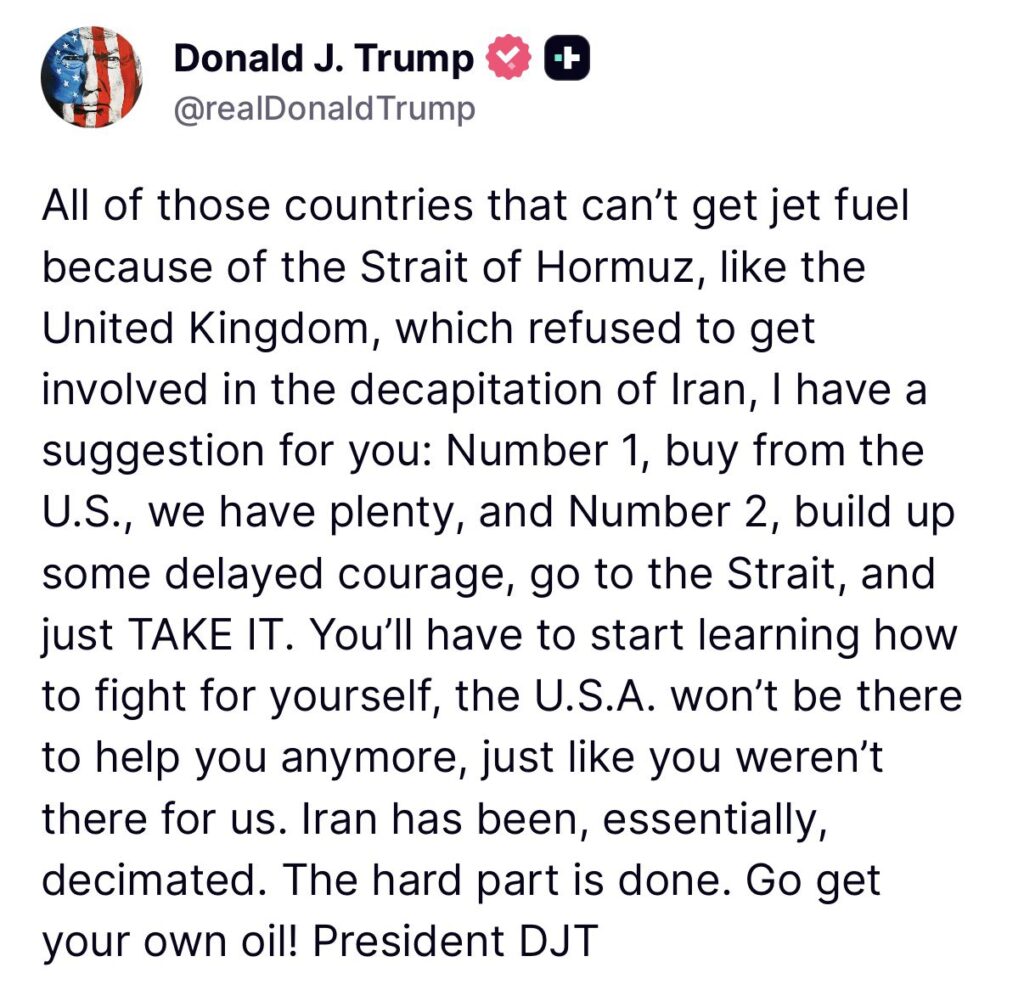
On March 31, 2026, Donald Trump posted a blunt and controversial message on Truth Social, targeting the United Kingdom and other Western allies amid the ongoing U.S.-led conflict with Iran and the growing disruption of global oil supplies. The message, delivered in Trump’s signature direct tone, suggested that countries struggling with jet fuel shortages should either buy oil from the United States or secure the Strait of Hormuz themselves, warning that America would no longer carry the burden alone.
Rising Tensions Following Iran Conflict
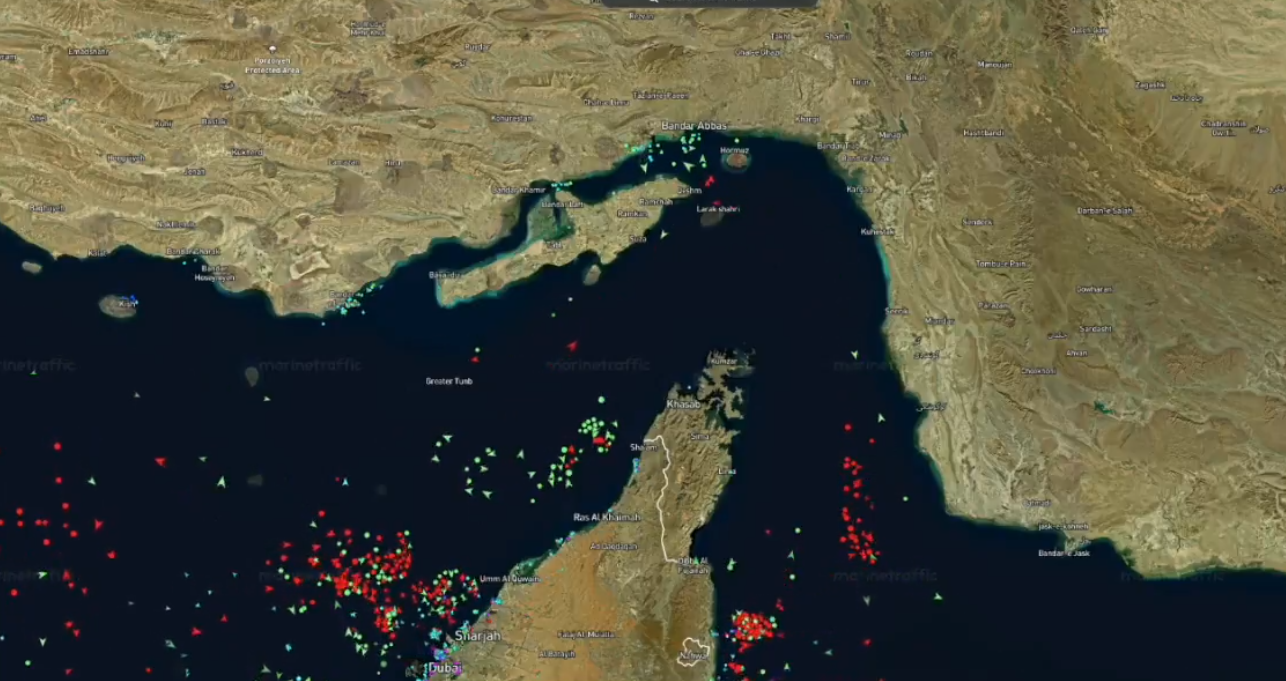
The statement comes in the wake of major U.S. military strikes on Iran conducted in coordination with Israel, which Trump described as a “decapitation” of Iran’s leadership. The strikes significantly weakened Iran’s command structure and escalated tensions across the Middle East. In response, Iran disrupted shipping through the Strait of Hormuz, one of the most critical oil transit routes in the world and a passage that carries roughly one fifth of global seaborne oil.
The disruption quickly triggered global energy market instability, pushing up oil prices and causing shortages of jet fuel and petroleum products in several import-dependent countries, particularly in Europe. Nations that rely heavily on maritime energy supplies began to feel the economic pressure as shipping delays and security risks intensified.
UK and European Allies Decline Deeper Military Role
Earlier in March 2026, Trump had urged NATO allies to provide military support to secure the Strait of Hormuz and ensure freedom of navigation. The request included calls for naval escorts, warships, and additional security assets to protect oil tankers and commercial vessels moving through the region.
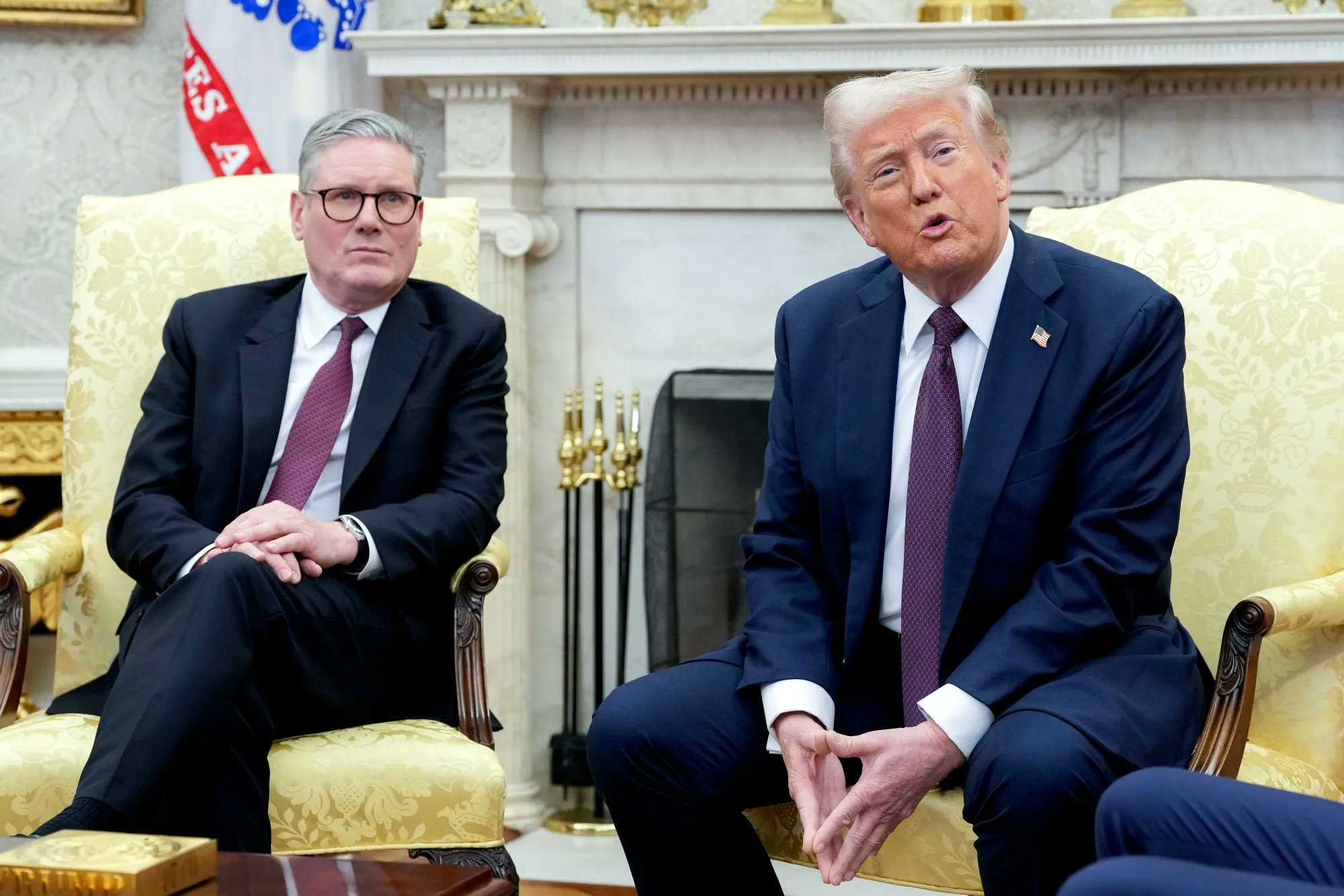
However, the UK under Prime Minister Keir Starmer, along with Germany and other European partners, declined to take on a deeper military role. European leaders argued that the conflict with Iran was not their war and emphasized that they did not want to be drawn into a broader military escalation. While the UK offered limited support such as mine hunting drones and defensive monitoring, it stopped short of offensive participation or full naval escorts, stressing the need for stability without expanding the conflict.
The disagreement highlighted growing divisions within NATO over how far allies should go in supporting U.S. military operations outside traditional collective defense frameworks.
Trump’s Direct Message to Allies
Trump’s March 31 post reflected clear frustration with what he described as a lack of support from allies who had benefited from decades of U.S. military protection. In his message, he directly addressed countries struggling with jet fuel shortages due to the Hormuz disruption, singling out the UK and other nations that declined to participate in the Iran operation.
He suggested that affected countries should either purchase oil from the United States, which he said had ample supply, or build up the courage to secure the Strait of Hormuz themselves. Trump added that the United States had already done the hard part by weakening Iran and that other countries should now take responsibility for protecting their own energy interests.
The message emphasized a shift toward self reliance, warning that America would not always step in to protect allies who failed to support U.S. military efforts.
U.S. Defense Leadership Echoes the Position
The sentiment was reinforced by U.S. Defense Secretary Pete Hegseth, who stated that other countries should be prepared to step up and take responsibility for securing critical waterways. He stressed that maintaining stability in the Strait of Hormuz should not be seen as a U.S. only responsibility, especially when the economic consequences affect multiple nations.
This position reflects a broader U.S. policy direction that encourages allies to contribute more actively to global security efforts, particularly in regions where their economic interests are directly at stake.
America First Approach Shapes the Response
Trump’s remarks align closely with his long standing America First approach to foreign policy and alliances. Throughout his political career, he has frequently criticized NATO and Western allies for relying too heavily on U.S. military support while contributing less to collective security efforts.
In this case, Trump pointed to the UK’s earlier hesitation to allow the use of British bases for offensive strikes and its reluctance to fully join the Iran campaign as examples of uneven burden sharing. The message reinforced his view that alliances should be transactional and based on mutual contribution rather than automatic U.S. protection.
Mixed Global Reactions
The remarks have sparked mixed reactions across political and diplomatic circles. Critics argue that encouraging European navies to enter a volatile and dangerous region without strong U.S. backing could escalate tensions and increase the risk of wider conflict. Some analysts described the message as unrealistic and potentially destabilizing at a time when global cooperation is needed to restore safe shipping routes.
Supporters, however, see the statement as a straightforward demand for accountability, arguing that allies cannot selectively support U.S. operations while still expecting American military protection during crises that affect their own economies.
Strait of Hormuz Remains a Global Flashpoint
The Strait of Hormuz continues to be a major point of tension as global oil markets react to ongoing disruptions. Iran has reportedly considered imposing tolls on certain vessels passing through the route, while the United States has warned of further action if shipping lanes are not reopened. The uncertainty continues to affect global energy prices, aviation fuel supplies, and transportation costs worldwide.
As the situation evolves, the dispute highlights growing strain in transatlantic relations and differing approaches to global security responsibilities. Trump’s message underscores a shifting dynamic in international alliances, where economic interests, military commitments, and geopolitical risk are increasingly intertwined.
Also Read