Trump Sets High-Stakes Deadline for Iran
On April 7, 2026, Donald Trump escalated tensions with Iran by issuing a dramatic ultimatum demanding the reopening of the Strait of Hormuz to international shipping or face devastating U.S. military strikes. The warning came with a self-imposed deadline of 8 p.m. ET, marking what the U.S. president described as a potentially historic turning point in global geopolitics.
Trump framed the moment as one of the most critical decisions in modern history, warning that failure to comply could lead to massive destruction of Iran’s infrastructure while also leaving the door open for a peaceful resolution if Tehran agrees to negotiations and restores shipping access.
A Critical Global Energy Flashpoint
The Strait of Hormuz remains one of the world’s most strategically important waterways, normally carrying about one-fifth of global seaborne oil. Iran’s restriction of shipping through the narrow channel has sent shockwaves through global energy markets and raised fears of a major military confrontation involving the United States, Israel, and Iran.
By targeting this chokepoint, Tehran has gained leverage in the broader conflict, but the move has also intensified international pressure. Washington has made it clear that keeping the waterway open is a top priority, viewing it as essential to global economic stability and energy security.
Explosive Rhetoric and Military Threats
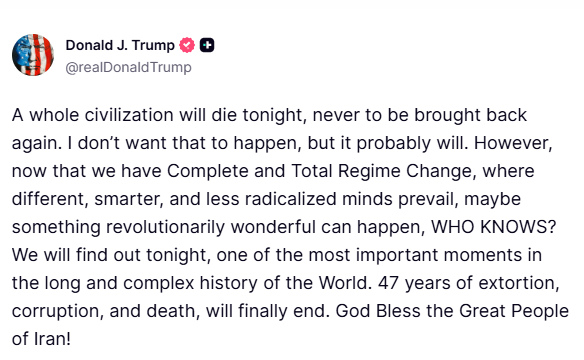
In a series of strongly worded messages posted on Truth Social, Trump warned that Iran could face catastrophic consequences if it failed to meet U.S. demands. He suggested that American forces could destroy key infrastructure, including power plants and bridges, in a rapid military operation that could take only a few hours.
In one of his most dramatic statements, Trump wrote that an entire civilization could “die tonight,” while insisting he hoped such an outcome could still be avoided. He also spoke of the possibility of “complete and total regime change” if new leadership emerged in Tehran and chose a different path.
The message combined aggressive threats with a diplomatic opening, suggesting that a deal could still be reached if Iran reopens the Strait and agrees to broader terms.
Iran Signals Defiance
Iranian officials have rejected key parts of the U.S. proposal and warned that any strikes on civilian infrastructure would trigger severe retaliation. Authorities in Tehran have called on citizens to defend critical facilities, with reports of volunteers mobilizing to protect power plants and key infrastructure.
The Iranian government has also reduced direct communication with Washington, relying instead on indirect negotiations through mediators while maintaining a firm public stance against U.S. pressure.
Legal and Humanitarian Concerns
Trump’s threats to target civilian infrastructure have raised serious concerns among international legal experts, who warn that attacks on power plants, bridges, or desalination facilities could violate international humanitarian law if they result in large-scale civilian harm.
Critics argue that such actions could be considered war crimes, while supporters of the administration’s approach say strong pressure is necessary to counter Iran’s regional activities and ensure global shipping security.
A Fork in the Road for Iran
Trump’s latest message presents two sharply different futures for Iran. One path involves continued defiance and the possibility of devastating military action, while the other suggests a potential breakthrough through negotiations and leadership change.
By ending his statement with “God Bless the Great People of Iran,” Trump attempted to separate the Iranian population from its leadership, signaling that his pressure campaign is aimed at the government rather than ordinary citizens.
World Watches as Deadline Approaches
As the deadline approaches, global markets remain tense and world leaders are closely monitoring the situation. Oil prices are fluctuating, shipping companies are on alert, and diplomatic channels remain active in hopes of preventing a major escalation.
Whether the night ends in military action or a last-minute diplomatic breakthrough remains uncertain. What is clear is that the confrontation over the Strait of Hormuz has become one of the most dangerous flashpoints in international politics, with consequences that could reshape the Middle East and the global economy.
Also Read
Trump Threatens to Strike Iran’s Energy and Water Infrastructure as Conflict Intensifies
Trump Tells UK to “Go Get Your Own Oil” as Strait of Hormuz Crisis Deepens Global Tensions