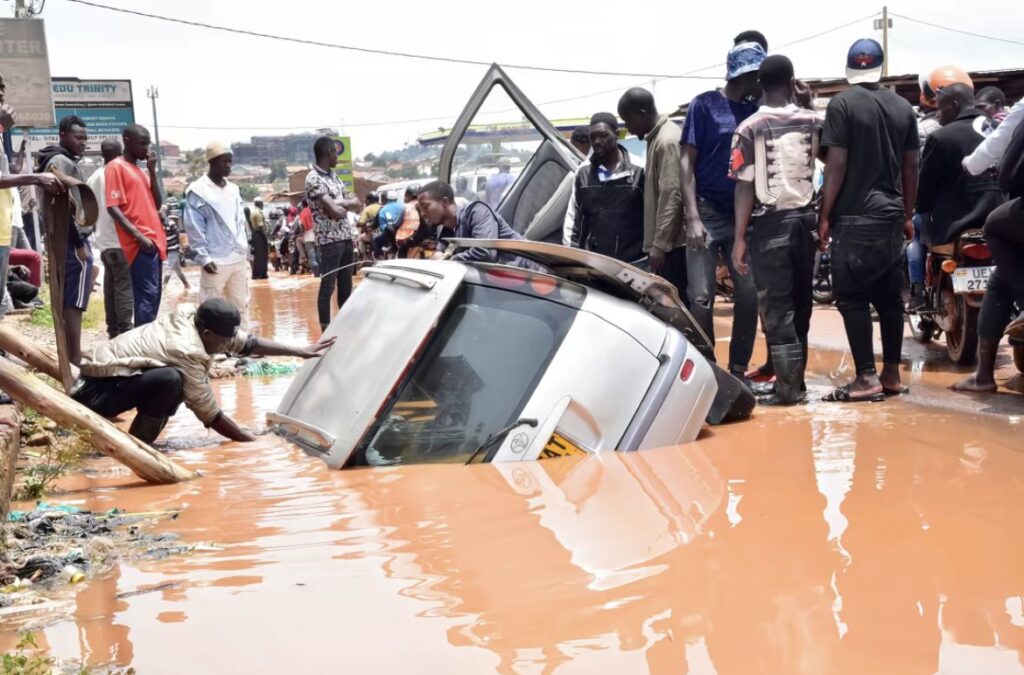
The capital city of Uganda woke today to widespread disruption and destruction after intense rainfall on March 6 triggered severe flash floods across Kampala. Streets were transformed into rushing waterways, vehicles submerged, shops inundated, and daily life brought to a standstill. While no fatalities have yet been reported from this specific event, the scale of the flooding underscores the city’s ongoing vulnerability to seasonal rains.
The downpour overwhelmed the city’s drainage systems, with downtown Kampala’s business district among the hardest hit. Dozens of shops and offices were flooded, forcing residents and traders to confront the sudden loss of stock and property. One shop owner described the heartbreak of seeing years of labor swept away in mere moments, a stark reminder of how quickly livelihoods can vanish under unrelenting rain.
In low-lying areas like Centenary Park, vehicles including a reported Benz were carried by the torrents, leaving behind haunting images of partially submerged cars that illustrate the power of the floodwaters. Roads quickly became impassable, stranding motorists and forcing pedestrians to wade through chest-deep water in some areas, causing gridlock that stretched for hours.
Kampala Capital City Authority (KCCA) teams responded immediately, working to clear blocked drains and assist residents. Yet the flood highlighted longstanding infrastructure challenges: clogged channels, plastic and debris-choked drainage systems, and inadequate flood management measures continue to turn seasonal rains into recurring crises. Residents and business owners voiced frustration at the repeated inability to prevent such events despite prior warnings and municipal taxes.
Uganda has now entered the March–May long rains season, with government advisories having warned of heightened risks for flash flooding in urban centers. The Office of the Prime Minister had urged preparedness, but yesterday’s deluge revealed a stark gap between cautionary messages and practical readiness. Thousands of residents were affected, some temporarily displaced, others facing potentially irreparable economic losses.
Authorities continue to monitor the situation closely, urging the public to avoid flooded areas, report blocked drains, and follow weather updates. Emergency services remain on high alert as meteorologists forecast further heavy rains in the coming days.
As Kampala grapples with the aftermath, the city mourns not only the destruction of property but the disruption of daily life and the recurring sense of vulnerability felt by its residents. The floods are a reminder of the urgent need for strengthened infrastructure and proactive measures to protect communities before the next rains arrive.