March 2, 2026 – Tehran — Iran launched multiple waves of missile and drone attacks across the Middle East on Monday, dramatically escalating an already intensifying regional war. The strikes targeted Israel and several U.S.-allied Gulf nations hosting American military assets, marking one of the most expansive retaliatory campaigns in recent regional history.
The offensive comes on the third consecutive day of heavy U.S. and Israeli military operations inside Iran. Those operations — dubbed “Operation Epic Fury” — have reportedly struck more than 2,000 Iranian targets since Saturday. According to Iranian sources, the strikes have resulted in the confirmed death of Supreme Leader Ayatollah Ali Khamenei and hundreds of casualties across the country.
Coordinated Missile and Drone Assaults
Iranian forces, alongside allied militias including Hezbollah, deployed ballistic missiles, armed drones, and other projectiles. Tehran described the attacks as direct retaliation for what it called an “unprecedented act of aggression” by the United States and Israel.
Iranian state media said the strikes were aimed at “U.S. military assets and their collaborators,” signaling a broad targeting strategy beyond Israeli territory.
Israel Under Heavy Fire
In Israel, multiple Iranian missile barrages struck civilian and military areas. Authorities confirmed impacts in Beit Shemesh, near Jerusalem, where a missile collapsed part of a synagogue shelter. At least nine people were killed, including three teenage siblings.
Additional strikes hit Beersheba in southern Israel, causing structural damage and light injuries. Explosions were also reported near Jerusalem and in other southern cities.
The Israel Defense Forces said it intercepted many incoming missiles but acknowledged that waves of attacks continued throughout the day. Rocket fire from Lebanon by Hezbollah coincided with the Iranian assault, further stretching Israeli air defense systems.
Gulf States Targeted
Several Gulf nations that host American military installations were also hit or targeted.
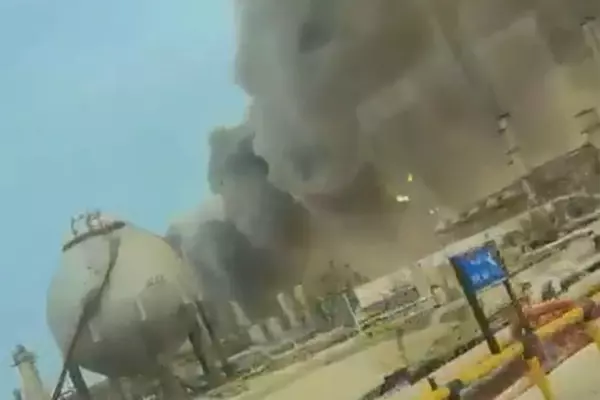
In Saudi Arabia, a drone struck the Ras Tanura refinery operated by Saudi Aramco, sparking a fire that disrupted energy operations. Officials said the blaze may have resulted from either missile debris or a direct impact.
In Qatar, Iranian drones and missiles targeted key energy infrastructure, temporarily halting liquefied natural gas (LNG) production at major facilities. The disruption immediately shook global energy markets, raising fears of prolonged supply constraints.
The United Arab Emirates experienced explosions in both Dubai and Abu Dhabi. Reports indicated that civilian infrastructure was affected, and at least three deaths were confirmed in strikes targeting sites linked to U.S. operations.
In Bahrain, drones struck buildings in Manama, including the ERA Tower and the Crowne Plaza Hotel, as well as causing minor damage to the airport. While initial reports indicated no fatalities in some incidents, material damage was described as extensive.
Kuwait reported Iranian attacks aimed at U.S. assets, including a strike near or on the U.S. Embassy compound. Amid the chaos, several U.S. fighter jets were mistakenly downed by Kuwaiti air defenses, according to preliminary reports.
Cyprus and Iraq Also Affected
Beyond the Gulf, an Iranian-made drone struck the British Royal Air Force base in Akrotiri, Cyprus, damaging the runway. No casualties were reported, and follow-up drones were intercepted.
U.S. bases in Iraq were also reportedly targeted, while explosions in Doha and widespread airspace disruptions led to thousands of flight cancellations across the region.
Mounting Casualties and Global Concern
While casualties from Iran’s retaliatory strikes appear lower than those reported inside Iran, the broader humanitarian toll is mounting. Iran’s Red Crescent estimates more than 550 people have been killed within Iran since the start of Operation Epic Fury.
In Washington, President Donald Trump addressed the nation for the first time since the campaign began. He said the U.S. objective is to dismantle Iran’s missile capabilities, naval power, nuclear ambitions, and its support for militant groups across the region. Trump indicated the campaign could last “four to five weeks” or longer and did not rule out the deployment of ground forces.
The United Nations and international observers have urged immediate restraint as the violence enters its third day. With airspace closures spreading, global markets reacting sharply, and civilian casualties rising, fears are growing that the conflict could spiral into a prolonged and multi-front regional war.
As military operations continue on multiple fronts, the Middle East now stands at one of its most volatile moments in years — with diplomatic pathways narrowing and the risk of broader international involvement increasing by the hour.