A Capital City Facing an Existential Water Threat
Kabul, the capital of Afghanistan, is confronting one of the most severe urban water crises in the world. Set in a high-altitude valley and surrounded by the rugged Hindu Kush, the city depends almost entirely on groundwater for its daily survival.
With a population now estimated at around 6 million people, and possibly as high as 7 million, Kabul’s water demand has far outpaced its natural supply. Experts warn that if current trends persist, it could become the first modern capital to run out of accessible water by 2030, raising alarm across humanitarian and environmental circles.
Rapid Depletion Beneath the Surface
Over the past decade, Kabul’s groundwater reserves have been shrinking at an alarming rate. Water levels in the city’s main aquifers have dropped by as much as 25 to 30 meters, a decline that reflects years of unchecked extraction.
The imbalance is stark. Each year, water is being drawn from underground sources far faster than it can be naturally replenished, with extraction exceeding recharge by tens of millions of cubic meters. Nearly half of Kabul’s wells have already dried up, forcing residents and businesses to drill deeper, often beyond 100 meters, just to find water.
This crisis is compounded by the city’s explosive growth. Since 2001, Kabul’s population has surged from under one million to several times that number, overwhelming infrastructure that was never designed for such demand. Today, only a small fraction of residents have access to piped water, leaving the majority reliant on private wells, tanker deliveries, or informal distribution systems.
The Drivers Behind the Crisis
The roots of Kabul’s water emergency lie in a combination of rapid urban expansion, climate stress, and governance challenges. The city is dotted with tens of thousands of unregulated borewells, many of which extract water continuously with little oversight or control.
At the same time, Afghanistan’s vulnerability to climate change has intensified the problem. Prolonged droughts in recent years, coupled with declining snowfall in the Hindu Kush, have significantly reduced the natural processes that replenish groundwater. Rainfall patterns have become increasingly erratic, further limiting recovery.
Decades of conflict have also left critical water infrastructure damaged or incomplete. Efforts to rebuild and modernize systems after 2001 were often inconsistent, and many projects stalled following the political transition in 2021. As a result, a large portion of Kabul’s groundwater is now contaminated, posing serious health risks to residents.
Daily Life in a City Running Dry
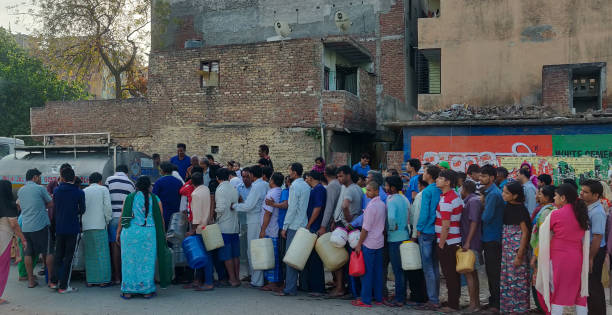
For Kabul’s residents, the crisis is not a distant threat but a daily struggle. Families often spend hours queuing for water or pay high prices to private suppliers, with some households using a significant portion of their income just to secure basic supplies.
In poorer communities, the burden is even heavier. Many families fall into debt to afford water, while children, particularly girls, miss school to help fetch it. The scarcity has also fueled tensions within neighborhoods, occasionally leading to disputes over access.
Even public institutions are not immune. Some government buildings now rely on trucked water, highlighting the depth of the crisis across all levels of society.
A Growing Humanitarian Concern
Beyond daily hardship, the broader consequences are increasingly alarming. Contaminated water sources have led to rising cases of waterborne diseases, including diarrhea, especially among vulnerable populations.
Humanitarian agencies warn that if the situation continues to deteriorate, millions could be affected, potentially triggering large-scale displacement. The collapse of Kabul’s aquifers would not only disrupt daily life but could also create a full-scale humanitarian emergency in one of the world’s most fragile regions.
Searching for Solutions Amid Constraints
Efforts to address the crisis are underway, but they remain limited in scope. Short-term responses, such as water trucking, distribution of filtration systems, and maintenance of existing pumps, provide temporary relief but do little to address the root causes.
Long-term solutions require a more comprehensive approach. Experts emphasize the need for stricter regulation of borewells, improved water management systems, and investment in infrastructure such as dams and water transfer projects. Initiatives like rainwater harvesting, wastewater treatment, and sustainable groundwater management could also play a critical role.
However, significant barriers remain. Financial constraints, political isolation, and reduced international aid have slowed progress on major projects. Without coordinated action and renewed support, many of these solutions risk arriving too late.
A Ticking Clock for Kabul
Kabul’s water crisis stands as a stark warning of how population growth, environmental pressures, and governance challenges can converge into a critical threat. While the city has not yet run dry, the trajectory is deeply concerning.
As of early 2026, conditions continue to worsen, and both residents and aid organizations are sounding urgent alarms. Without decisive intervention, Kabul could soon face an unprecedented urban collapse driven not by conflict, but by the simple absence of water.
Also Read
Trump Tells UK to “Go Get Your Own Oil” as Strait of Hormuz Crisis Deepens Global Tensions