Gulf Countries Seek Alternatives to Hormuz
Middle Eastern countries, particularly Gulf Arab states, are revisiting ambitious pipeline projects to bypass the Strait of Hormuz as regional tensions and Iranian threats continue to disrupt global energy flows. The renewed interest comes as ongoing conflicts expose the risks of relying on a single maritime chokepoint that carries roughly 20 percent of the world’s oil supply.
Major producers such as Saudi Arabia, United Arab Emirates, and Iraq are now accelerating discussions around land-based export routes to ensure oil can reach international markets even if shipping through Hormuz is restricted or blocked.
Saudi Arabia’s East-West Pipeline Leads the Way
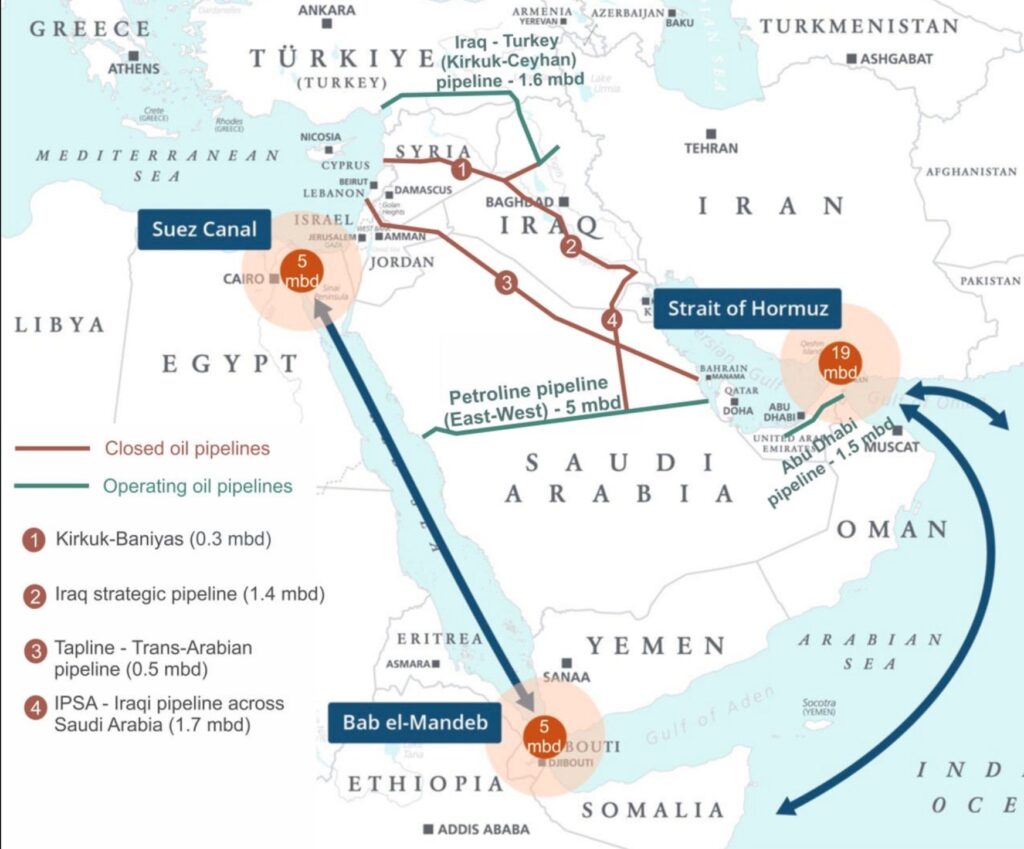
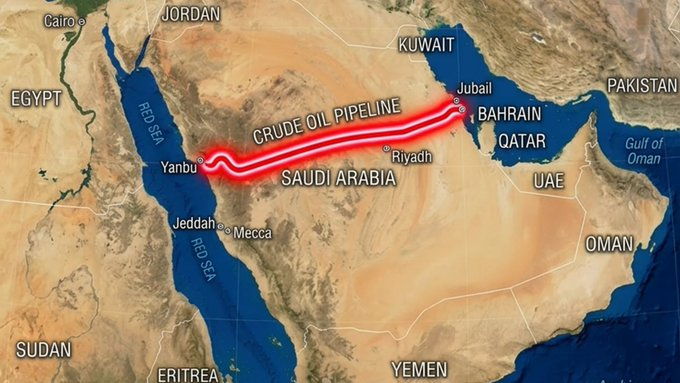
Saudi Arabia already operates one of the most effective bypass systems through the East-West Pipeline, also known as Petroline. Built during the Iran–Iraq War in the 1980s, the pipeline stretches about 1,200 kilometers from eastern oil fields to the Red Sea port of Yanbu.
The infrastructure allows crude oil to reach global markets without passing through the Persian Gulf or Hormuz, making it a critical strategic asset during crises. In recent weeks, Saudi Aramco has significantly increased flows through the pipeline and is considering expanding capacity to further strengthen export resilience.
Energy analysts have described the system as a forward-thinking investment that now serves as a vital safety net for the kingdom’s oil exports.
UAE and Iraq Explore Expansion Plans
The United Arab Emirates is also considering expanding its pipeline network, particularly the existing Abu Dhabi to Fujairah pipeline, which already allows oil to reach the Gulf of Oman without passing through Hormuz. Expanding this route is viewed as a faster and more cost-effective solution compared to building entirely new infrastructure.
Meanwhile, Iraq is exploring long-discussed projects such as the Basra to Aqaba pipeline in Jordan and potential connections to Turkey or Mediterranean ports. These routes could restore export flexibility and reduce dependence on southern Gulf shipping lanes, particularly during times of conflict.
Some regional discussions even involve creating a broader network of corridors linking Gulf producers to Red Sea and Mediterranean outlets, forming a more resilient energy transport system.
Massive Costs and Engineering Challenges
Despite the renewed urgency, these pipeline projects face major obstacles. Construction costs are extremely high, with estimates suggesting that replicating Saudi Arabia’s East-West Pipeline today could cost at least $5 billion, while larger transnational pipelines could exceed $15 to $20 billion.
Engineering challenges also remain significant, as pipelines would need to cross deserts, mountains, and politically unstable regions. Building and maintaining such infrastructure would require advanced technology, strong security measures, and long-term coordination among multiple governments.
Political risks further complicate the situation, particularly for cross-border routes that pass through sensitive or conflict-prone areas.
Focus on Expanding Existing Infrastructure
Given the high costs and long timelines, many Gulf countries are expected to prioritize expanding existing pipelines rather than launching entirely new mega-projects. Strengthening current routes in Saudi Arabia and the UAE offers a more practical short-term solution while larger regional networks remain under discussion.
This incremental approach allows governments to improve export security without committing immediately to complex multi-country infrastructure projects.
Strategic Shift in Global Energy Planning
The renewed focus on pipeline alternatives reflects a broader strategic shift in how Gulf countries approach energy security. Relying heavily on a single narrow strait for a large portion of global oil exports is increasingly seen as a long-term vulnerability.
Diversified routes could stabilize export revenues, protect global energy markets from sudden disruptions, and reduce the geopolitical leverage associated with controlling key maritime chokepoints.
A Long-Term Solution to a Persistent Risk
While pipelines will not completely eliminate risks such as sabotage or land-based attacks, they provide a critical layer of protection against maritime disruptions. Gulf states are also investing in storage facilities, LNG infrastructure, and alternative export systems to strengthen resilience.
The revival of pipeline discussions shows how regional conflict is forcing long-term strategic thinking in energy infrastructure. Although progress will likely be gradual, the goal is clear: reduce dependence on the Strait of Hormuz and build a more secure and flexible energy export network for the future.