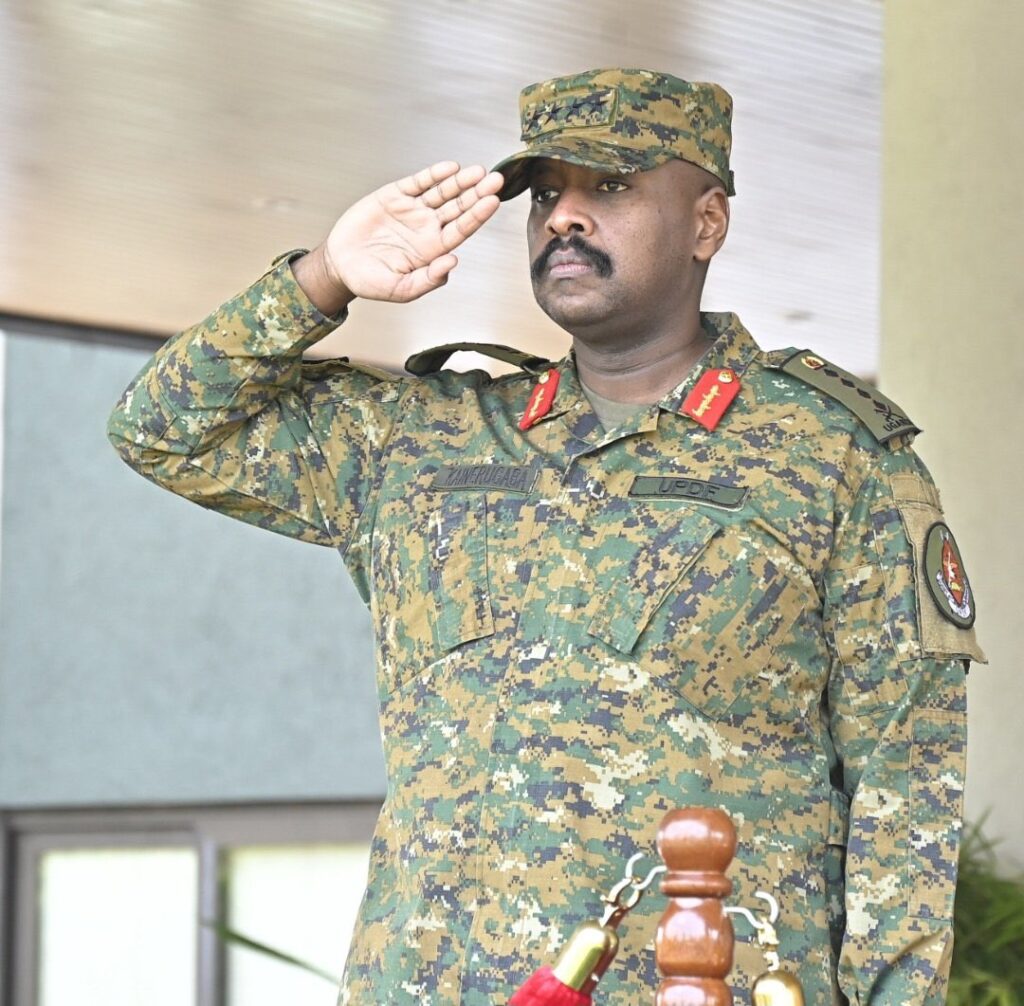
Uganda’s Chief of Defence Forces, Muhoozi Kainerugaba, has stirred public debate after making strong statements in support of Israel amid the ongoing tensions and war involving Iran in the Middle East. The remarks, posted on X around March 25–26, 2026, quickly went viral and drew mixed reactions both locally and internationally.
In a series of posts, Gen. Muhoozi expressed frustration over the prolonged Middle East conflict while clearly backing Israel’s survival and security. He stated that the world is tired of the war and called for an end to the fighting, but warned that any attempt to destroy Israel would draw Uganda into the conflict on Israel’s side. He further added that if Israel ever needed help, Uganda would be ready to assist, describing Israelis as “Ugandan brothers.” In follow up remarks, he also warned that Uganda would retaliate if it were ever targeted with missiles by Iran.
The comments come at a time of heightened tensions in the Middle East involving Israel, Iran, and the United States, with ongoing military exchanges and growing international concern about regional stability. Muhoozi’s statements stand out because they signal a clear and direct alignment with Israel from one of Africa’s most prominent military leaders, adding a new voice to an already complex global conflict.
Uganda’s relationship with Israel has deep historical roots, most notably linked to the Entebbe Raid of 1976, when Israeli commandos rescued hostages from a hijacked plane at Entebbe Airport during the rule of Idi Amin. The operation remains a defining moment in Israeli military history and continues to shape diplomatic and symbolic ties between the two countries. Muhoozi has previously honored Israeli figures such as Yonatan Netanyahu, the Israeli commander killed during the Entebbe operation and brother of Benjamin Netanyahu.
His stance, however, contrasts with the more cautious position taken by President Yoweri Museveni. As chair of the Non-Aligned Movement, Museveni has generally advocated for de escalation and dialogue, calling for a two state solution to the Israeli Palestinian conflict while maintaining diplomatic relations with Israel, Iran, the United States, and Arab nations. He has emphasized the importance of peace and balance, urging all sides to avoid actions that could escalate the conflict further.
Muhoozi’s statements have triggered mixed reactions across social media and political circles. Some supporters, particularly pro Israel voices, praised his bold stance and highlighted Uganda’s Christian solidarity with Israel. Others questioned the wisdom of publicly aligning Uganda with a distant conflict, noting that the country maintains diplomatic relations with Iran and has no direct involvement in Middle Eastern military affairs. Critics also pointed out that foreign policy positions are typically guided by the government and the Ministry of Foreign Affairs rather than individual military leaders.
From a practical perspective, analysts say Uganda is unlikely to deploy troops to the Middle East even if tensions escalate. The Uganda People’s Defence Force has extensive regional experience in operations such as peacekeeping missions in Somalia and operations against insurgent groups in East and Central Africa, but projecting military power to the Middle East would require significant logistics, alliances, and resources beyond current capabilities. As a result, many observers interpret Muhoozi’s comments as symbolic political messaging rather than a concrete military plan.
The situation also highlights the growing influence of social media in shaping diplomatic and political narratives. Statements from high ranking officials can quickly gain global attention and shape perceptions of a country’s position, even when they do not reflect official government policy. This has raised questions about the role of public communication by senior military leaders in sensitive international matters.
Ultimately, Gen. Muhoozi Kainerugaba’s remarks reflect broader geopolitical and ideological dynamics, including Uganda’s historical ties with Israel, its strategic partnerships with Western allies, and the challenges of balancing non aligned diplomacy with personal or institutional views. While President Museveni continues to push for peace and dialogue, Muhoozi’s strong pro Israel position has added a new dimension to Uganda’s voice in global discussions on the Middle East conflict.
For now, Uganda’s official foreign policy remains focused on de escalation and diplomatic engagement, but the comments from its top military chief have sparked conversation about the country’s role and stance in international conflicts far beyond its borders.