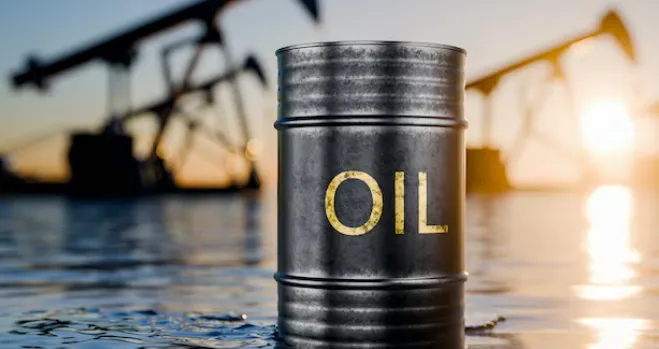
Oil Prices Hit Highest Levels Since 2008
Global crude oil prices have surged sharply, with key physical oil benchmarks reaching levels not seen in nearly two decades. In early April 2026, Dated Brent, the benchmark that reflects the price of real physical oil cargoes, climbed above $140 per barrel and peaked at around $141.37, marking its highest level since the 2008 global financial crisis.
This spike highlights a tightening physical oil market, where buyers are paying significantly more for immediate deliveries. The surge signals growing concerns about supply disruptions and rising geopolitical risks affecting global energy flows.
Gap Between Physical and Futures Prices Widens
The recent spike has created a noticeable gap between physical oil prices and futures contracts, a rare situation that points to urgent demand for immediate supply. While Dated Brent moved above $140, Brent Crude futures traded around $107 to $110 per barrel during the same period.
Meanwhile, West Texas Intermediate (WTI), the main US oil benchmark, hovered between $113 and $115 per barrel. This difference shows that traders and refiners are paying a premium for real, deliverable oil due to fears of supply shortages in the short term.
Such a gap often signals stress in the physical oil market and can indicate potential supply disruptions or logistical bottlenecks.
How Today’s Prices Compare to 2008
The current surge brings oil prices closer to historic highs recorded during the 2008 commodity boom. At that time, global crude prices reached around $145 to $147 per barrel before collapsing during the global financial crisis.
In 2022, oil prices also surged following Russia’s invasion of Ukraine, with Brent briefly approaching $139 per barrel. However, the current Dated Brent levels now exceed those conflict-driven peaks in physical market terms.
Even so, when adjusted for inflation, the 2008 peak remains higher in real value, equivalent to roughly $180 to $190 per barrel in today’s terms.
Middle East Tensions Driving the Surge
The main driver behind the current oil price spike is escalating geopolitical tension in the Middle East, particularly involving the United States, Israel, and Iran. The situation has raised fears of disruptions in oil production and transportation across the region.
A major concern is the Strait of Hormuz, one of the world’s most critical oil transit routes. Nearly 20 percent of global oil shipments pass through this narrow waterway, making it highly sensitive to military or political instability.
Attacks on energy facilities in Gulf countries and rising threats of further military escalation have added a risk premium to oil prices. Buyers are rushing to secure immediate oil shipments, pushing physical prices higher than futures contracts.
Ripple Effects Across the Global Economy
Rising oil prices often have wide-reaching economic consequences. Higher crude costs typically lead to increased fuel prices, affecting transportation, electricity generation, and manufacturing.
For consumers, this means higher gasoline, diesel, and air travel costs, which can drive inflation and reduce purchasing power. Businesses face rising operating expenses, especially in logistics and production, which can slow economic growth if the trend continues.
At the same time, oil-producing countries and energy companies may benefit from higher revenues, although market volatility remains a major concern for investors.
Market Uncertainty and Future Outlook
Analysts say the oil market remains highly unpredictable as geopolitical tensions continue to evolve. If tensions ease and shipping routes become more secure, prices could stabilize or fall. However, prolonged conflict or further attacks on oil infrastructure could push prices even higher.
Before the recent crisis, many forecasts expected oil prices to average around $60 per barrel in the coming years due to potential oversupply. Those projections have now been overshadowed by geopolitical risks and supply concerns.
For now, energy markets are closely watching both physical oil benchmarks like Dated Brent and futures prices for signs of where the market is heading next. The coming weeks will be critical in determining whether this surge becomes a temporary spike or the start of a longer period of high oil prices.
Also Read
Uganda’s Fuel Supply Holds Steady Amid Middle East Turmoil, Government Reassures Public