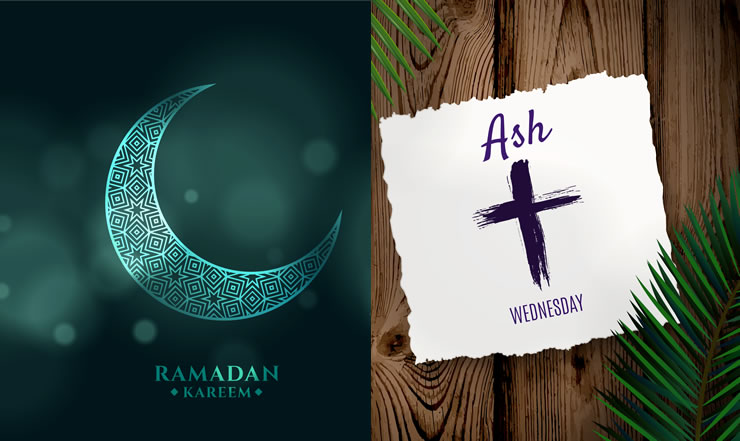
February 18, 2026 brings a rare and meaningful moment on the global religious calendar, as both Lent for many Christians and Ramadan for Muslims begin on the same day. This alignment, with Ash Wednesday coinciding with the start of the Islamic holy month, happens only occasionally due to differences between the Christian solar calendar and the Islamic lunar calendar. Some estimates suggest such a convergence appears roughly every three decades.
For Christians, Lent is a 40 day season of spiritual preparation leading up to Easter. It begins on Ash Wednesday and commemorates the 40 days Jesus spent fasting in the wilderness. The period is marked by prayer, repentance, charity, and personal sacrifice. Many believers attend church services where ashes are placed on the forehead in the shape of a cross, symbolizing humility, mortality, and a renewed commitment to faith. Fasting during Lent often includes abstaining from certain foods or giving up personal comforts as an act of devotion.
For Muslims, Ramadan is the ninth month of the Islamic calendar and one of the Five Pillars of Islam. Its start depends on the sighting of the crescent moon, but in 2026 it falls in alignment with February 18 for many parts of the world. Throughout the month, Muslims fast from dawn until sunset, refraining from food, drink, and other physical needs during daylight hours. The period also emphasizes prayer, reading the Quran, charity, self discipline, and compassion for those in need. Each day’s fast is broken at sunset with iftar, and the month concludes with the celebration of Eid al Fitr.
The overlap between these two sacred seasons highlights shared spiritual themes across faith traditions. Both periods focus on self reflection, discipline, generosity, and drawing closer to God. In communities where Christians and Muslims live side by side, the coincidence offers a powerful opportunity for mutual respect, interfaith dialogue, and collective reflection on compassion and sacrifice.
Although the practices differ in form and duration, the deeper purpose remains similar. This uncommon alignment serves as a reminder that diverse faith traditions can intersect in meaningful ways, encouraging unity, understanding, and a shared pursuit of spiritual growth.