Mao Attends NRM Caucus Retreat in Kyankwanzi
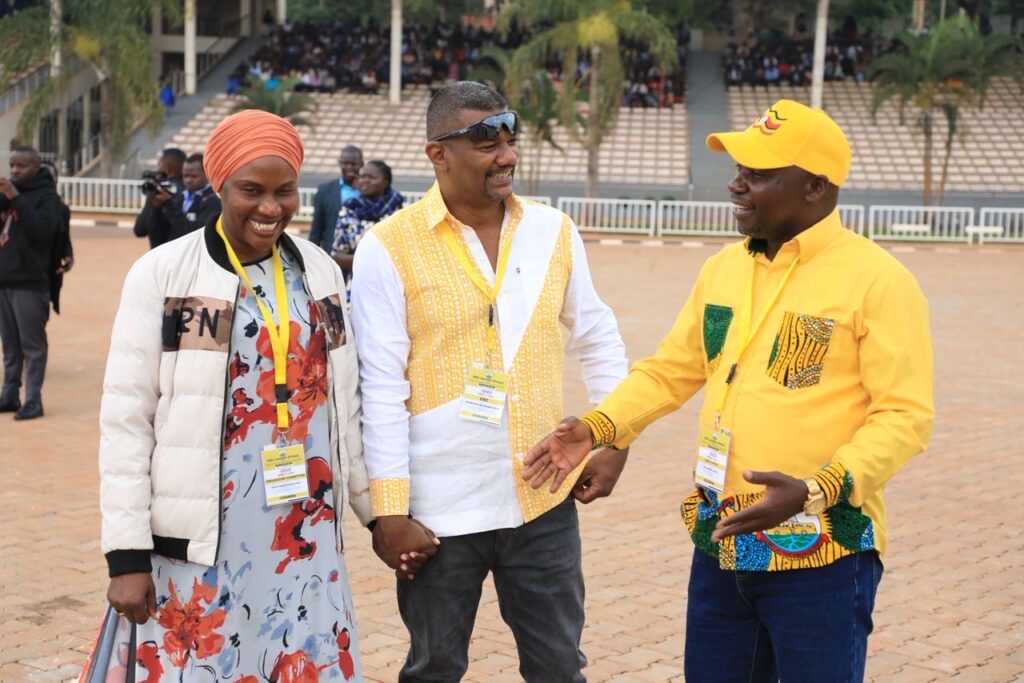
Norbert Mao’s decision to attend the National Resistance Movement (NRM) Parliamentary Caucus Leaders’ Retreat at the National Leadership Institute in Kyankwanzi in April 2026 has sparked intense debate across Uganda’s political landscape. Mao, who is President General of the Democratic Party (DP), Minister of Justice and Constitutional Affairs, and a newly elected Member of Parliament, confirmed his participation after receiving a formal invitation from the ruling party.
The retreat, which brings together NRM MPs, party-leaning independents, and invited leaders, is traditionally used to orient legislators on governance priorities, ideology, and national development strategies under Yoweri Museveni. Mao’s presence, however, stands out because he leads one of Uganda’s oldest opposition parties, making his attendance politically significant.
A Symbol of Growing Cross-Party Cooperation
Mao framed his participation as constructive engagement in national governance, thanking the NRM for the invitation and emphasizing cooperation under the “sister party” arrangement between DP and NRM. His message, highlighted by the hashtag “TUKOPAMOJA,” signaled a willingness to work closely with the ruling party on national priorities.
Supporters argue that this reflects political maturity and a pragmatic approach to governance. They believe leaders from different political backgrounds should engage in discussions that shape the country’s future, especially in areas such as constitutional reforms, development strategies, and parliamentary orientation.
However, critics see the move differently, viewing it as another sign that parts of Uganda’s opposition are gradually aligning with the ruling establishment.
Pressure on Opposition Unity
Mao’s attendance has intensified divisions within the Democratic Party and the wider opposition. Some DP members and pressure groups have openly criticized the move, arguing that attending a ruling-party caucus retreat undermines the party’s independence and identity as an opposition force.
The situation highlights a broader challenge facing Uganda’s opposition: maintaining unity and a clear political identity. When a prominent opposition leader participates in ruling-party ideological retreats while also serving as a minister, the distinction between government and opposition becomes less clear.
This development also sends a signal to other opposition parties, including National Unity Platform (NUP) and factions linked to the Forum for Democratic Change (FDC), about the evolving nature of political engagement in Uganda.
Strengthening NRM’s Political Influence
For the NRM, Mao’s participation reinforces an image of inclusivity and broad-based governance. By inviting opposition figures into key discussions, the ruling party demonstrates openness while simultaneously expanding its influence across political lines.
Political analysts suggest that such engagements can help the NRM build alliances ahead of important parliamentary decisions, including leadership positions and legislative priorities. In a Parliament where the ruling party already holds a strong majority, cooperation with selected opposition leaders further strengthens its strategic position.
The Kyankwanzi retreat, often associated with ideological orientation and policy alignment, therefore becomes not just a training ground for NRM MPs but also a platform for consolidating political influence.
Implications for Parliamentary Oversight
A key concern raised by observers is the potential weakening of parliamentary oversight. A strong opposition typically acts as a watchdog by challenging government policies, proposing alternatives, and ensuring accountability.
When opposition leaders take part in ruling-party retreats and hold ministerial roles, critics argue that this oversight function may be diluted. Public perception could shift toward viewing the political system as dominated by a single power center, reducing confidence in multiparty competition.
At the same time, supporters of Mao’s approach argue that engagement from within government structures may offer a more effective way to influence policy and deliver results for citizens.
Speakership Speculation and Political Strategy
Mao’s presence at Kyankwanzi has also fueled speculation about his potential role in the leadership of the 12th Parliament, particularly the race for Speaker. While Mao has downplayed such claims, stating that the retreat is about governance and orientation, observers believe the platform provides an opportunity to build alliances with influential NRM figures.
Engagement at this level could strengthen his political leverage and position him as a bridge between government and opposition forces, though it also risks alienating some of his traditional support base.
What This Means for Uganda’s Opposition
The broader implication of Mao’s Kyankwanzi participation is a shift in how opposition politics is practiced in Uganda. The move reflects a growing divide between leaders who favor cooperation with the government and those who advocate for a more confrontational approach.
In the short term, this may lead to fragmentation within opposition ranks and reduced coordination on key national issues. In the long term, it raises questions about whether Uganda’s political system is evolving into a dominant-party structure with selective inclusion of opposition figures.
Ultimately, Mao’s attendance at the NRM retreat highlights the complex and fluid nature of Ugandan politics, where cooperation, strategy, and survival often intersect. Whether this strengthens national consensus or weakens the opposition’s ability to challenge government policies will become clearer as the 12th Parliament begins its work.
Also Read
Norbert Mao Declares Bid for Speaker of Uganda’s 12th Parliament