IMF Signals Major Shift in Financial Infrastructure
The International Monetary Fund (IMF) has stated that tokenization is reshaping regulated finance by moving financial assets onto programmable digital ledgers, offering major efficiency gains while introducing new risks that require strong policy frameworks and trust anchors. The statement comes from an April 2026 IMF note titled Tokenized Finance, authored by Tobias Adrian, the IMF’s Financial Counselor and Director of the Monetary and Capital Markets Department.
The report presents tokenization as a structural transformation of the global financial system rather than a simple technological upgrade. According to the IMF, programmable ledgers and digital tokens could redefine how assets are issued, traded, and settled, fundamentally changing the architecture of regulated financial markets.
What Tokenization Means for Modern Finance
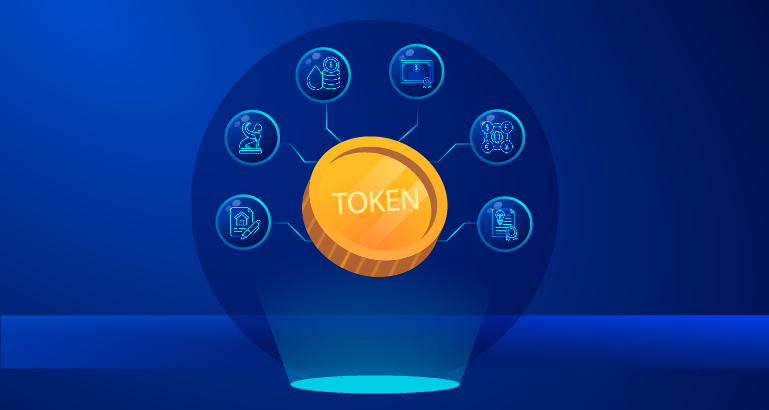
Tokenization refers to the process of converting real-world financial assets such as stocks, bonds, real estate, and funds into digital tokens that exist on shared blockchain-based or distributed ledgers. These tokens represent ownership or claims on underlying assets and can be transferred instantly between parties.
In traditional finance, settlement often takes several days and involves multiple intermediaries. Tokenized finance aims to streamline this process by enabling atomic settlement, where asset transfer and payment occur simultaneously and irreversibly, reducing delays and counterparty risk.
The system also allows programmable features through smart contracts, enabling automatic compliance checks, dividend payments, and conditional transactions. As a result, markets could operate continuously with improved transparency and efficiency compared to legacy infrastructure.
Key Benefits Highlighted by the IMF
The IMF recognizes that tokenization could significantly improve the functioning of regulated financial markets. One major advantage is faster and cheaper settlement, which reduces operational costs and eliminates many of the delays present in traditional systems.
Improved liquidity is another key benefit, as tokenized assets can be traded more easily and around the clock, potentially unlocking capital that is currently tied up in slow-moving settlement processes. The use of programmable contracts can also embed compliance directly into transactions, allowing real-time enforcement of regulatory requirements such as identity verification and anti-money laundering checks.
The report also suggests that tokenization could broaden access to financial markets by connecting issuers directly with investors and enabling innovative financial products that were previously difficult to implement.
Risks and Systemic Concerns
Despite the potential advantages, the IMF warns that tokenization could introduce new vulnerabilities into the global financial system. One concern is the possibility of faster financial crises, as instant settlement removes traditional time buffers that regulators and institutions rely on to intervene during market stress.
Liquidity pressures could also increase, as institutions may need to maintain higher levels of liquid assets to support continuous settlement. In addition, reliance on smart contracts and automated systems raises governance risks, especially if critical financial processes depend on code that may fail or lack proper oversight.
Cross-border regulatory challenges are another concern. Tokenized assets can move instantly across jurisdictions, making it more difficult for authorities to monitor activity and enforce consistent rules. The IMF warns that this could lead to regulatory fragmentation or arbitrage if not properly coordinated internationally.
Policy Roadmap for Safe Implementation
To address these challenges, the IMF outlines a set of policy recommendations aimed at ensuring financial stability while allowing innovation to continue. A key proposal is to anchor tokenized settlement in safe assets such as wholesale central bank digital currencies, which would provide a stable and trusted foundation for transactions.
The report also calls for clear legal frameworks to ensure certainty around ownership rights and settlement finality in tokenized markets. Regulators are encouraged to adopt consistent rules based on the principle of “same activity, same risk” and to implement governance safeguards for smart contracts, including audit requirements and emergency override mechanisms.
International coordination is emphasized as essential, particularly to manage cross-border flows and prevent regulatory gaps. Policymakers are urged to act early to shape the emerging system before it becomes too entrenched.

Growing Role of Tokenization in Global Markets
The IMF’s assessment reflects a broader shift in how financial institutions view tokenization. Major banks, asset managers, and market infrastructure providers are increasingly experimenting with tokenized bonds, funds, and other instruments, with expectations that trillions of dollars in assets could eventually move onto programmable ledgers.
For financial markets, this could mean lower transaction costs, improved capital efficiency, and new opportunities in real-world asset tokenization. For regulators and central banks, it signals the need to modernize financial infrastructure and potentially develop supporting tools such as central bank digital currencies.
A Turning Point for Financial Innovation
The IMF’s message is clear: tokenization is no longer a niche concept but a transformative force in regulated finance. While the technology promises a more efficient and programmable financial system, its success will depend on strong policy frameworks, legal certainty, and trusted settlement assets.
As the global financial system moves toward digital and programmable infrastructure, the challenge for policymakers will be balancing innovation with stability. The IMF argues that the window to shape this new architecture is open now, and proactive regulation will determine whether tokenized finance strengthens or destabilizes the financial system.
Also Read
Digital Euro Project Advances as ECB Pushes Toward Europe’s Central Bank Digital Currency